All things bright and beautiful

Viola canadensis, May 19, 2022

Common & scientific name
Canada violet, Viola canadensis

Family
Viola, Violaceae

Location
Difficult Trail, 8,200’

Fun, weird, helpful, or little known fact

Canada violets, found scattered throughout our woods, are unmistakeable.  They have heart-shaped leaves, bright white petals, and purple lines guiding pollinators to their yellow center.  Here they will come into contact with pollen, which will stick to their legs or bodies and be carried to the next flower for cross-pollination.  Cross-pollination allows for the exchange of genetic information among plants, leading to the extraordinary diversity we see on our hikes.

Good day sunshine

Corydalis aurea, May 19, 2022

C. aurea, Twin Lakes, June 7, 2022

Common & scientific names
Golden smoke, Corydalis aurea

Family
Fumitory, Fumariaceae

Location
Difficult Campground, 8,100’

Fun, weird, helpful, or little known fact
One of only four species found in Colorado from the Fumitory family, abundant in the east and on the west coast. These unusual flowers are related to Dutchman’s breeches and Bleeding-hearts, and are the yellow cousin of one of Colorado’s most spectacular flowers, Case’s fitweed, Corydalis caseana, found only in wetter areas of Colorado like Marble and Crested Butte.

This could be the bane of your existence

Actea rubra, May 19, 2022

Common & scientific name
Baneberry, Actea rubra

Family
Buttercup, Ranunculaceae

Location
Difficult Trail, 8,100’

Fun, weird, helpful, or little known fact

Let’s be honest: most of us are fascinated by deadly poisonous things.  Especially beautiful deadly poisonous things.  Enter Baneberry.  It begins with a delicate sprig of white flowers, which turn to shiny red or white berries later in the summer—berries that can kill you.  Stop and pay homage to this beautiful, deadly killer

How low can you go?

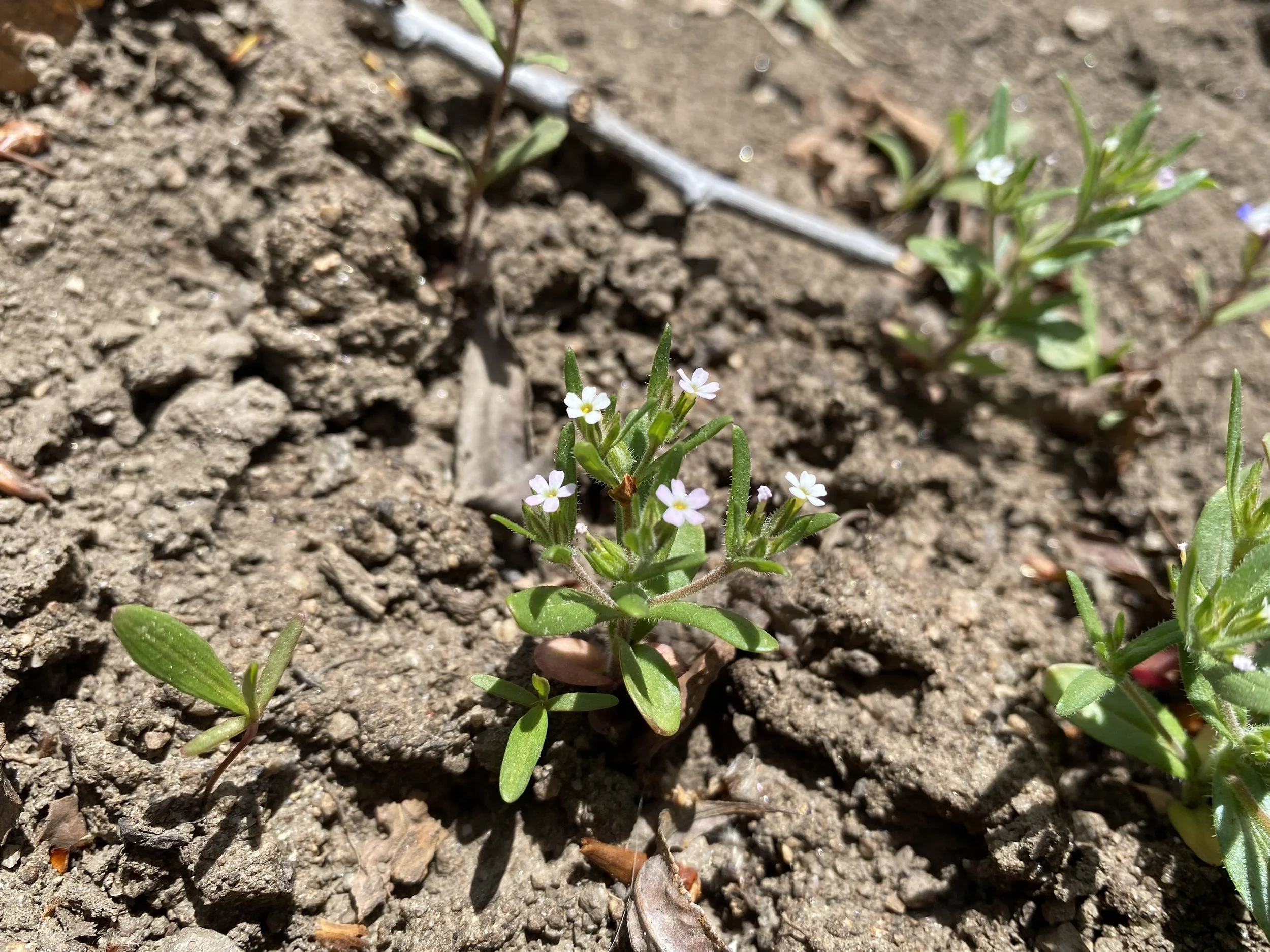
Microsteris gracilis, May 19, 2022

Common & scientific name
Slender phlox, Microsteris gracilis

Family
Phlox, Polemoniaceae

Location
Difficult day use area, 8,100’

Fun, weird, helpful, or little known fact

An early bloomer that’s easy to miss, this tiny flower has 5 petals, its leaves and stem are glandular and hairy, and it rarely grows more than a few inches high. It is frequently found growing beside another tiny beauty, Blue-eyed Mary, both of which will reward the hiker who is willing to stop and get low.

With a name like "ragwort" . . .

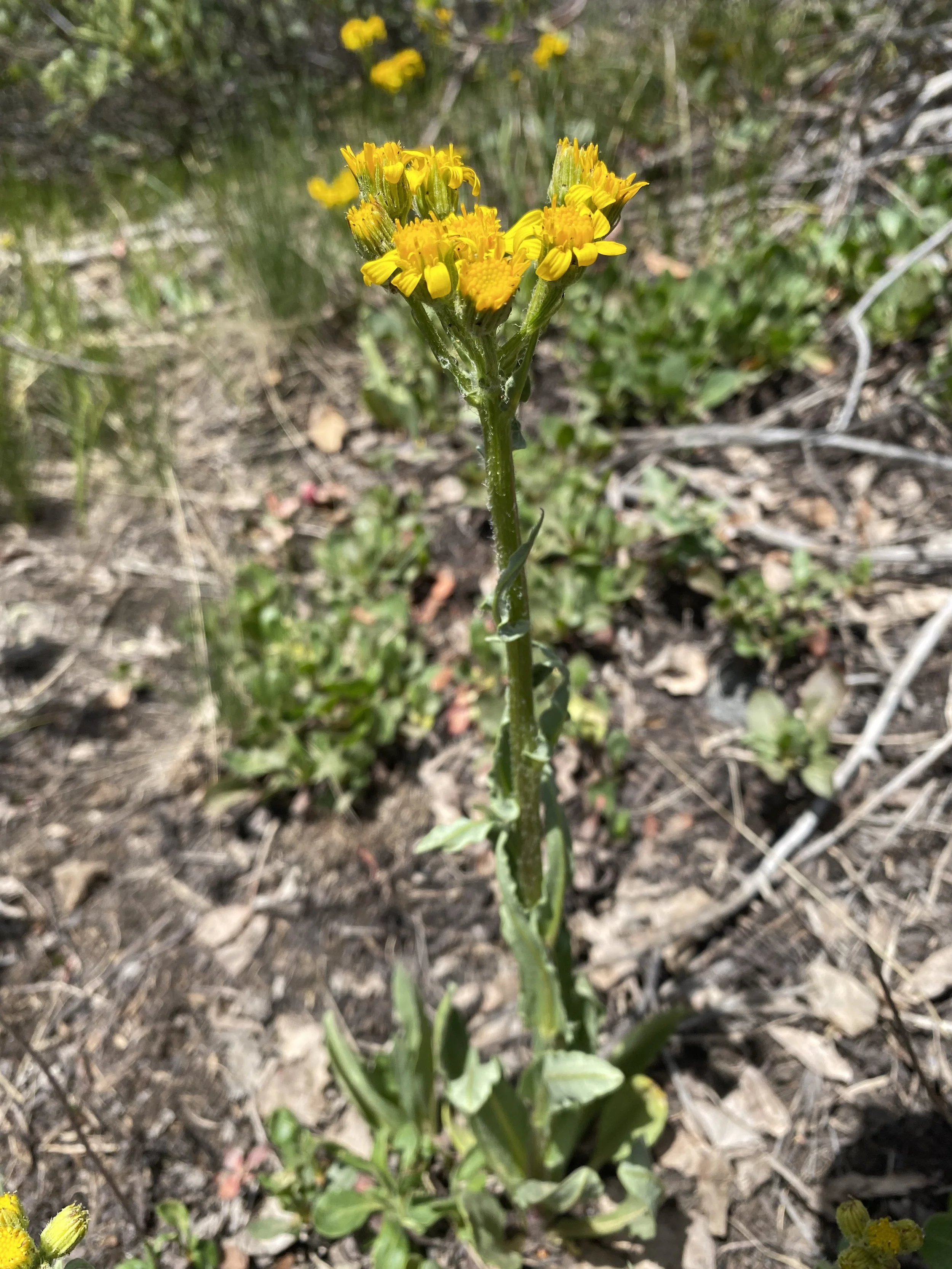
Senecio integerrimus, May 19, 2022

Common & scientific name
Lambstongue ragwort, Senecio integerrimus

Family
Sunflower, Asteraceae

Location
Difficult Trail, 8,100’

Fun, weird, helpful, or little known fact

This is one Senecio of a thousand throughout the world, and one of two dozen in our region.  They are all yellow, occasionally interbreed, and for all these reasons can be a bear to tell apart!  This Senecio is tall, has just a couple leaves on its stem, and its middle “flower”  has a shorter, thicker stalk than the flowers surrounding it. It loves the Pass!

Cat fights

Arenaria parviflora, May 19, 2022

A. parviflora, May 19, 2022

Common & scientific name
Small-leaf pussytoes, Antennaria parviflora

Family
Sunflower, Asteraceae

Location
Difficult Trail, 8,100’ & Grottos (below), 9,200’

Fun, weird, helpful, or little known fact

It can be difficult to tell our half-dozen or so pussytoe species apart.  The flowers of Small-leaf pussytoes are white or pinkish (see both photos), and its leaves, fuzzy on both sides, are thin on the stem and wide at the base, and the basal leaves are either rounded or obtuse at the apex. They spread by stolons—slender stems running along the top of the ground—like strawberries.

A. parviflora, May 31, 2022

One tuft candy

Noccaea montana, May 19, 2022

Common & scientific name
Wild candytuft, Noccaea montana

Family
Mustard, Brassicaceae

Location
Difficult Trail, 8,100’

Fun, weird, helpful, or little known fact

This ubiquitous flower is one of our earliest bloomers.  It can be found from the valley floor in Glenwood Springs in early April to the highest peaks on the Pass in July.  Like all mustards, it is edible, but less bitter than most.

Evergreen (and yellow and red)

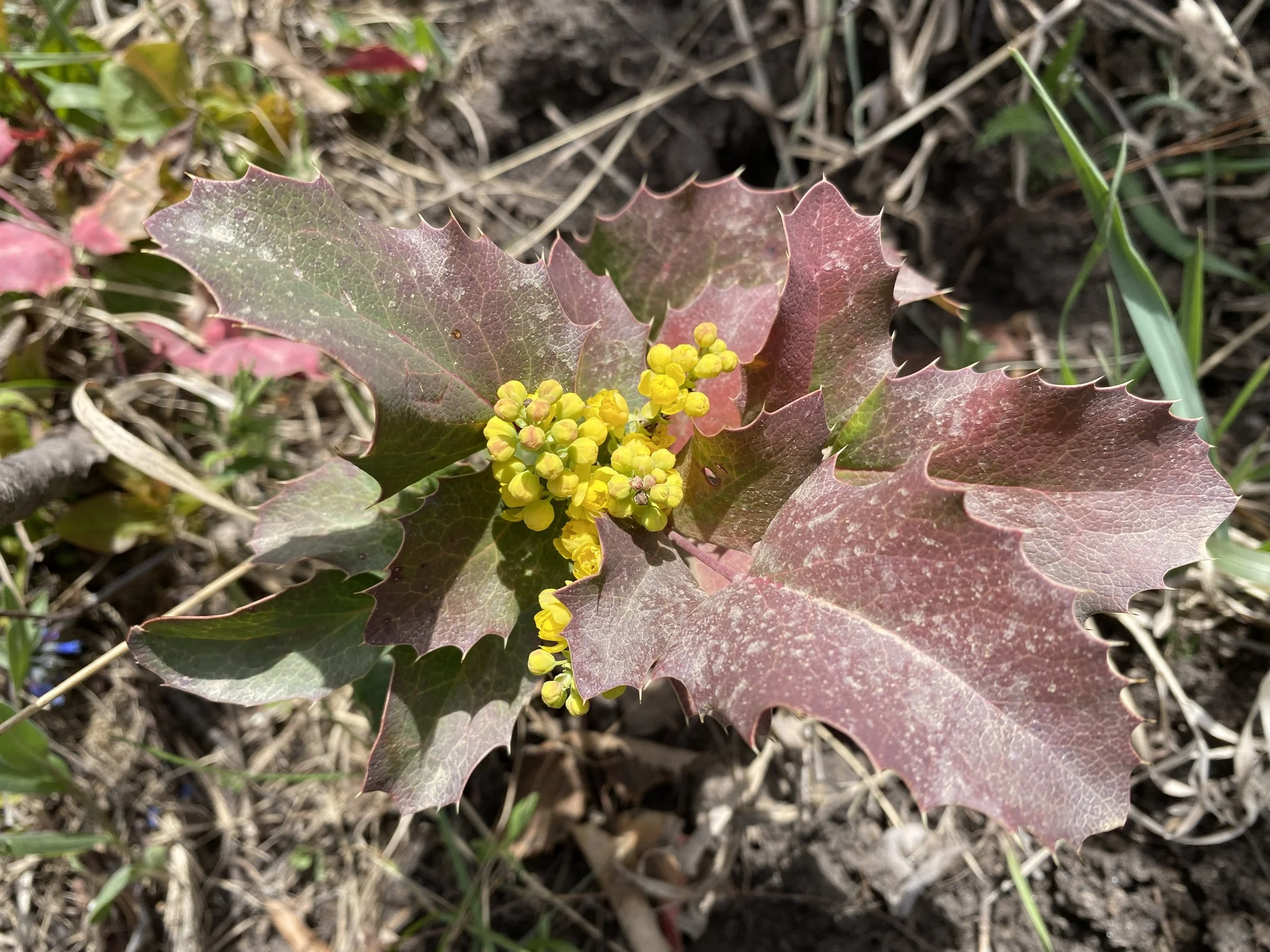
Mahonia repens, May 19, 2022

Common & scientific name
Creeping Oregon grape, Mahonia repens

Family
Barberry, Berberidaceae

Location
Difficult Campground, 8100’

Fun, weird, helpful, or little known fact

This hardy plant is abundant throughout our area.  An evergreen, it is able to withstand many degrees of heat, cold, and drought, and its leaves turn a beautiful red in the fall (some of which remain red in the spring, as seen in this photo).  The berries are edible, but much more delicious to bears than people!

(Not) singin' the blues

Mertensia fusiformis/brevistyla, May 19, 2022

Common & scientific name
Spring bluebells, Mertensia fusiformis/brevistyla

Family
Forget-me-not, Boraginaceae

Location
Difficult Trail, 8,100’

Fun, weird, helpful, or little known fact

This charming genus starts small in the spring at lower elevations with Mertensia fusiformis (or M. brevistyla, depending on your botany expert of choice), shows up similarly small in the alpine in early-mid June as M. lanceolata, and goes big (like 6-feet big) in mid-summer as Mertensia ciliata.

What a dandy

Taraxacum officinale, April 26, 2022

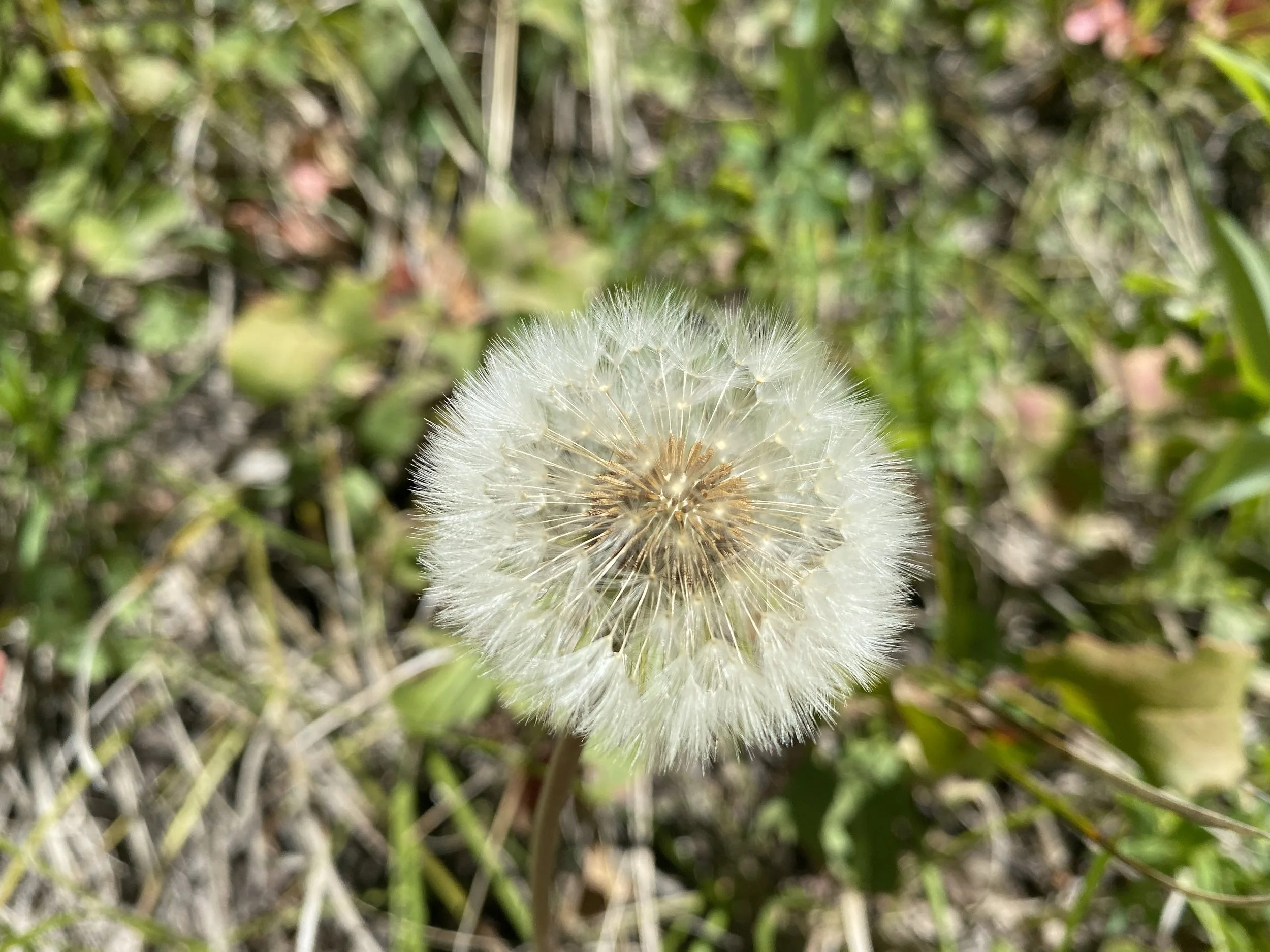
T. officinale, May 31, 2022

Common & scientific name
Dandelion, Taraxacum officinale

Family
Aster, Asteraceae

Location
Difficult day use area, 8,200’

Fun, weird, helpful, or little known fact
Of Eurasian origin and now virtually everywhere, owing in part to the fact that their seeds remain viable for nine years or more, with a single plant producing more than 5,000 seeds a year. The good news: Dandelions are an important early spring food source for deer, elk, bear, and (maybe) moose?

The Sunflower family is considered the most highly evolved of all flowering plants: what appears to be one “flower” actually consists of many tiny flowers aggregated together in a flower head consisting most commonly of ray flowers (the “petals”) and disk flowers (the “button” in the middle). This aggregation strategy is thought to attract more pollinators.

T. officialane seedhead, June 2, 2022

First wildflower of 2022!

Claytonia lanceolata, April 26, 2022

Common & scientific name
Spring beauty, Claytonia lanceolata

Family
Purslane, Portulacaceae

Location
Difficult Trail, 8,100’

Fun, weird, helpful, or little known fact
Wherever you find this cheery, candy cane-striped, white flower, you’ll know the snow just melted there. Spring beauty is sometimes called “Indian potato” because its corm—the enlarged, bulb-like base of its stem under the soil—apparently tastes like potato when cooked. I say “apparently” because I haven’t personally tried them. I prefer ogling them to eating them (and I’m lazy).