Bursting with abundance

Cardamine cordifolia, June 7, 2022

Common & scientific name
Heartleaf bittercress, Cardamine cordifolia

Family
Mustard, Brassicaceae

Location
Roadside, 8,900’

Fun, weird, helpful, or little known fact

Like all mustards, Heartleaf bittercress has four petals in the shape of a cross, and all its parts are edible (if bitter).  It will bloom in profusion near streamsides all summer.  When it has gone to seed, give its pods a squeeze and watch them burst!

What makes a wildflower a weed?

Barberea orthoceras, June 7, 2022

Common & scientific name
American yellowrocket, Barberea orthoceras

Family
Mustard, Brassicaceae

Location
Winter gate, 8,500’

Fun, weird, helpful, or little known fact

This is a circumpolar species, meaning it is distributed around the world in the Northern Hemisphere.  If it looks like a “weed,” well . . . that brings up the interesting question of what a “weed” really is.  This plant is native and has evolved over many thousands of years to share space with other natives.  But it isn’t particularly attractive, and can grown in great numbers (not on the Pass, however).  Probably the best definition of a weed is a plant that grows where people don’t want it to grow!

In a daze

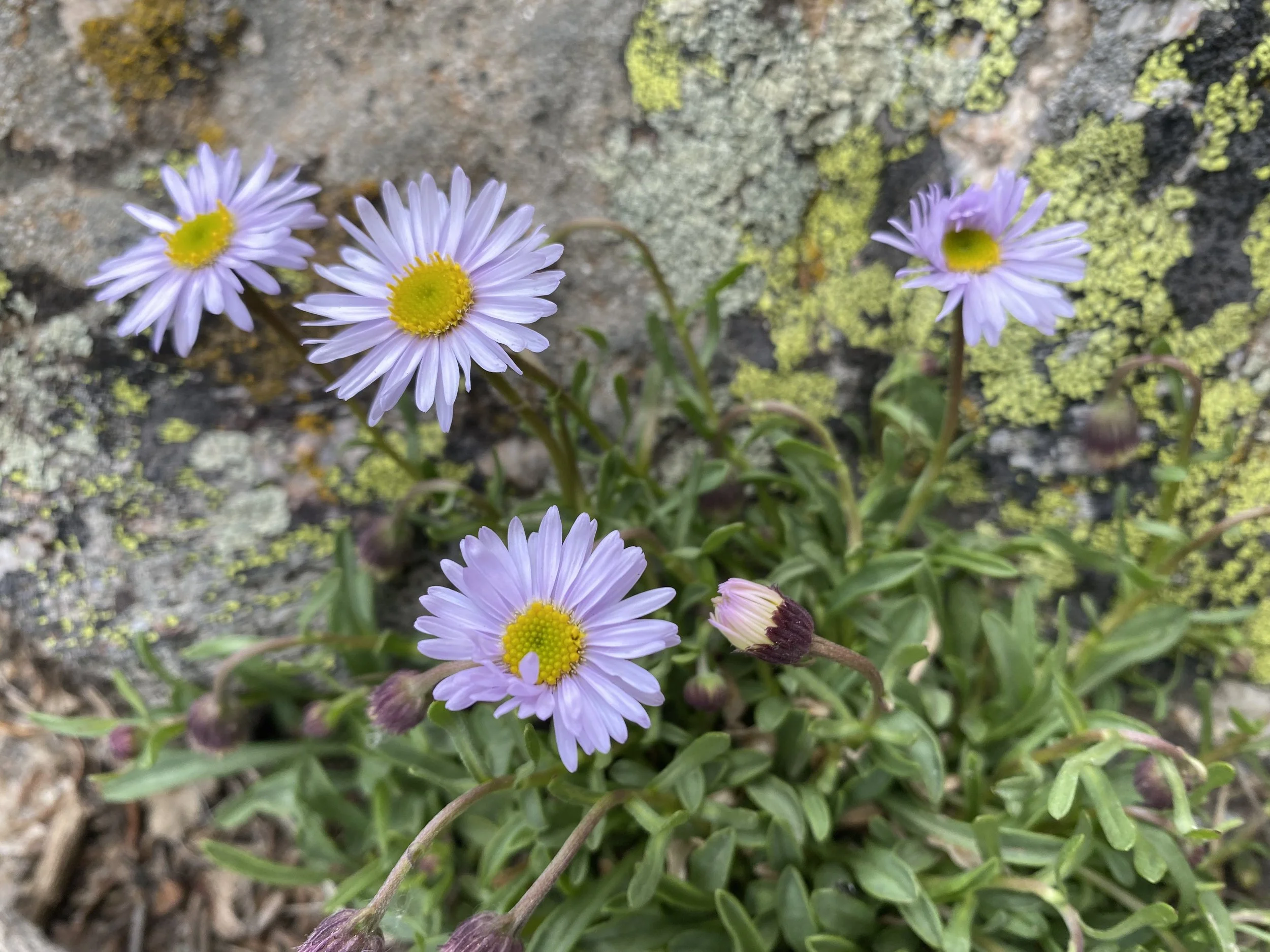
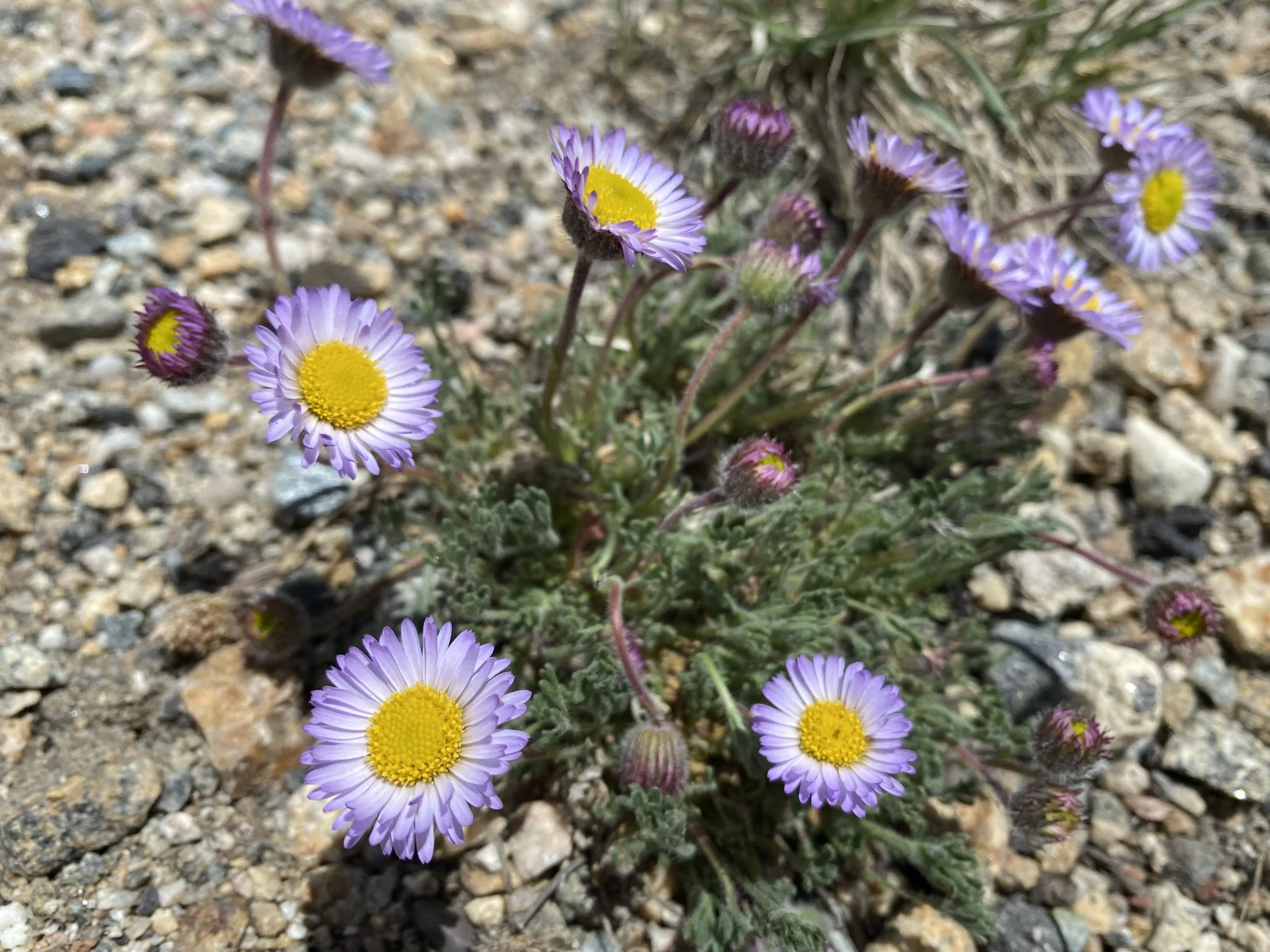
Erigeron leiomerus, June 3, 2022

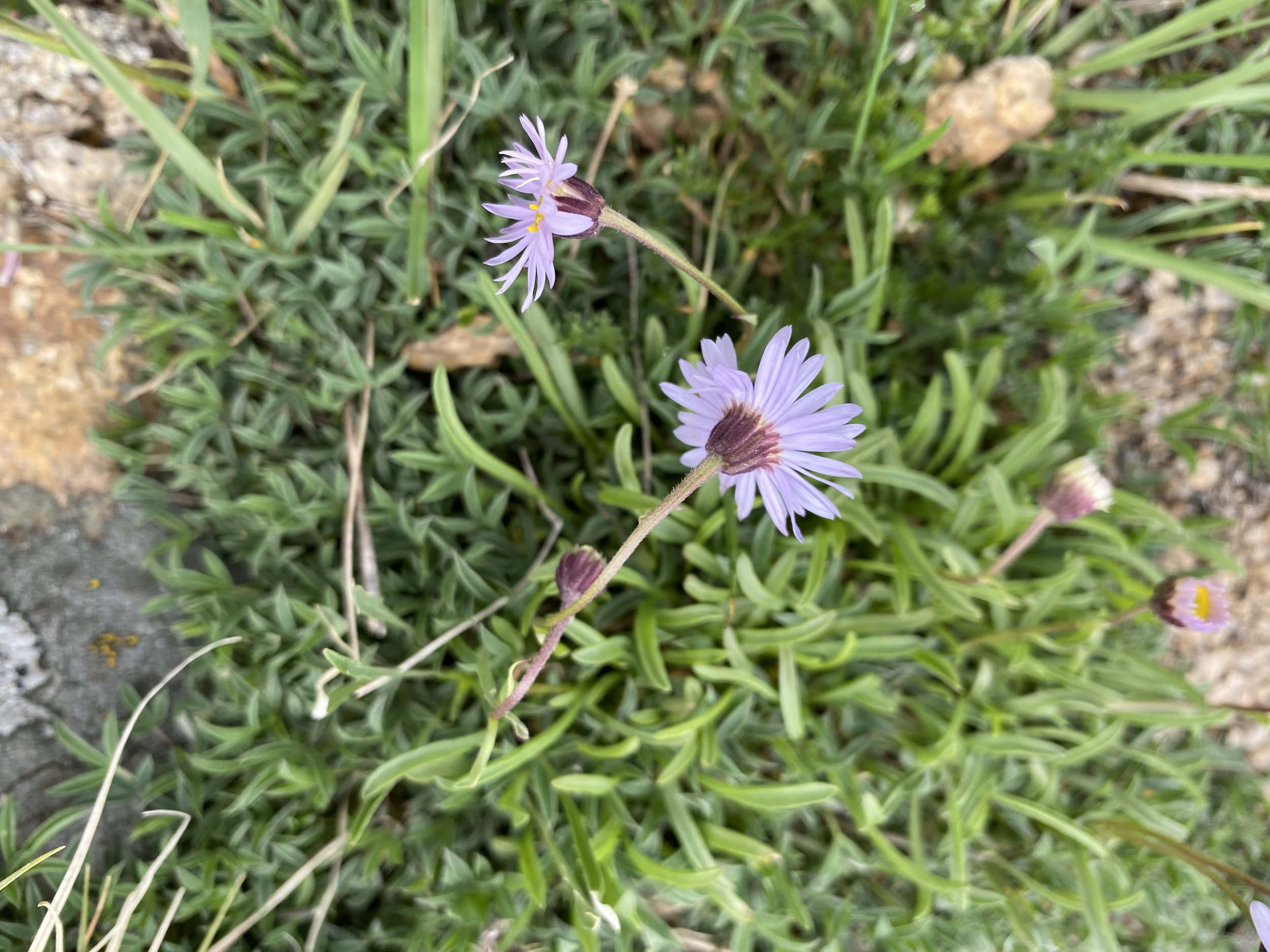
E. leiomerus phyllaries, Top Cut 12,100’, July 14, 2022

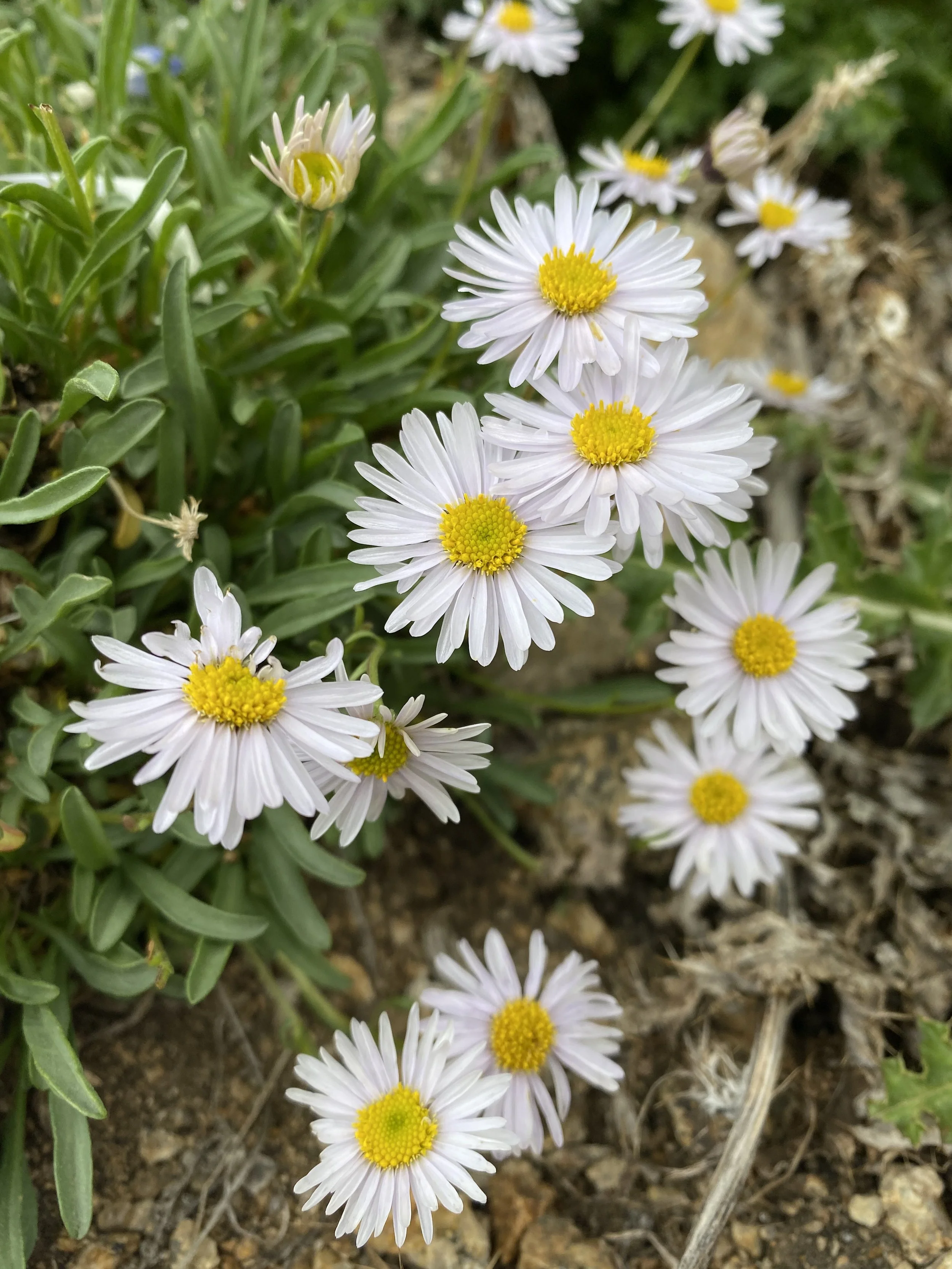
E. leiomerus, white version, Top Cut 12,100’, July 14, 2022

Common & scientific name
Rockslide daisy, Erigeron leiomerus

Family
Sunflower, Asteraceae

Location
Grottos climbing wall, 9,500’

Fun, weird, helpful, or little known fact
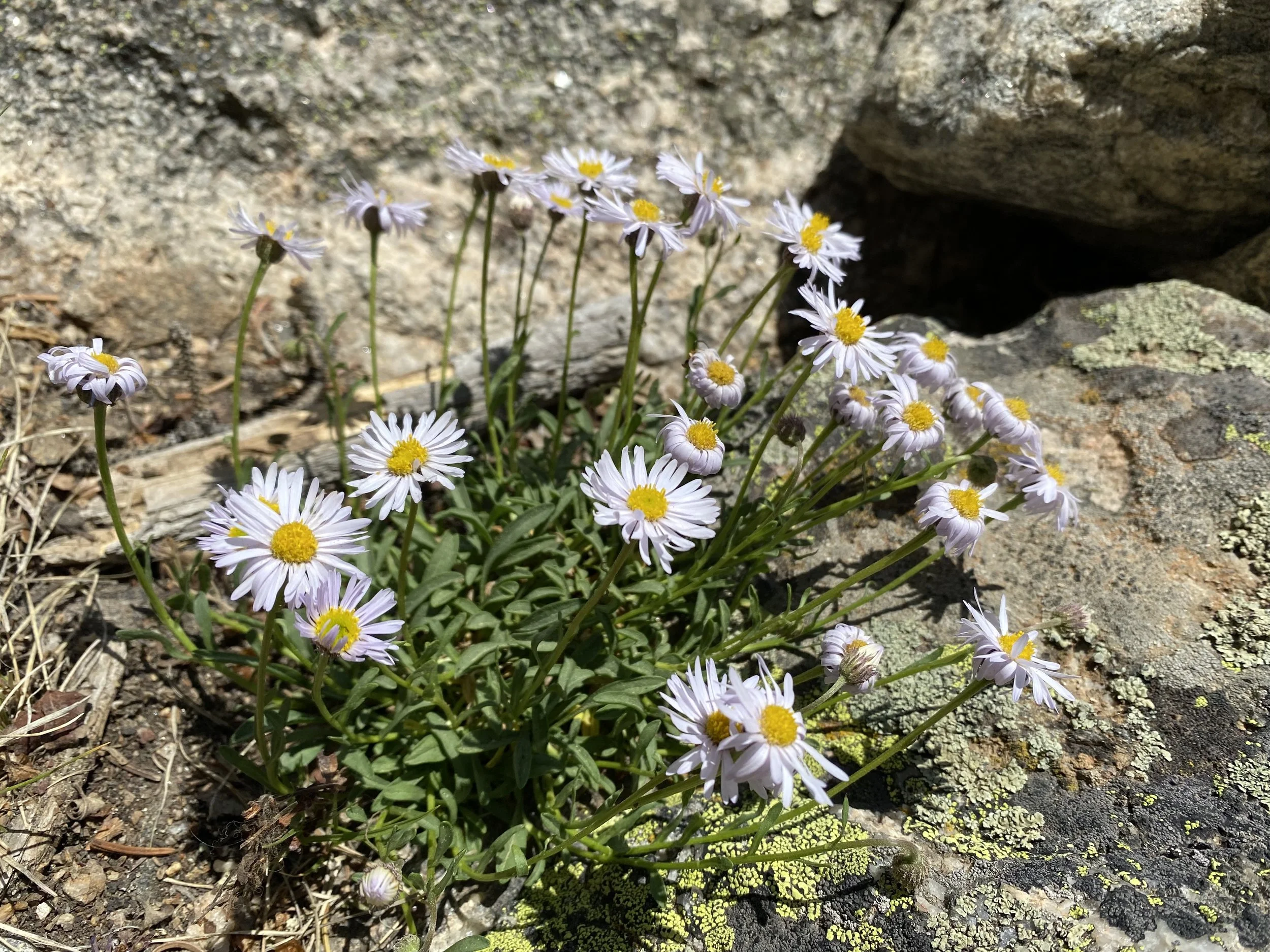
This cheery lavender and occasionally white daisy has glandular, deep-purple phyllaries (see bottom left) and few, very small stem leaves (most of its leaves are at the base of the plant, i.e., “basal” leaves).

E. leiomerus, June 16, 2022

How low can you go

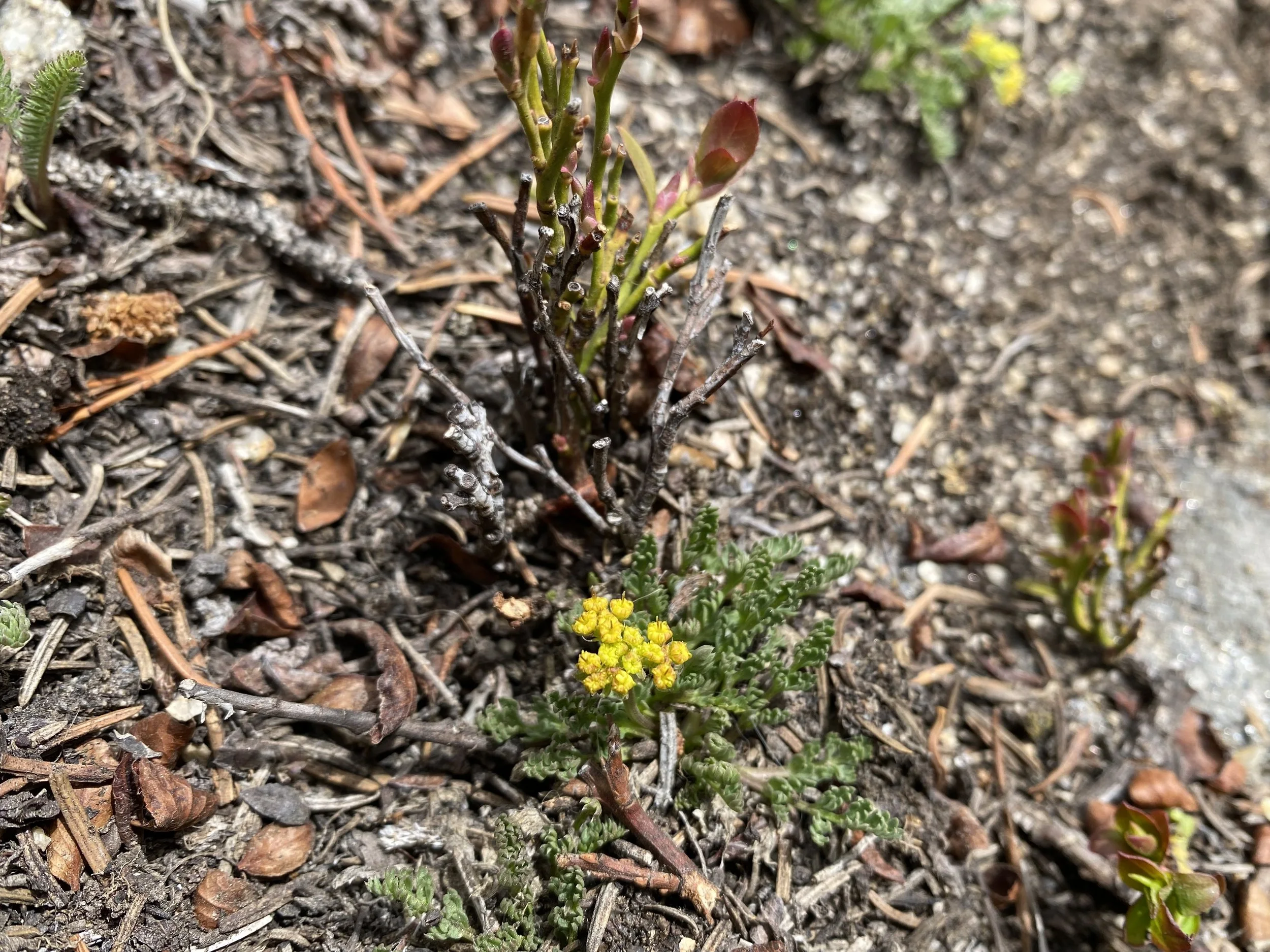
Cymopterus alpiina, June 3, 2022

Common & scientific name
Alpine parsley, Cymopterus alpina

Family
Parsley, Apiaceae

Location
Above Midway, 12,300’

Fun, weird, helpful, or little known fact

William Weber, the foremost authority on the flora of Colorado, describes Oreoxis alpina as “a common dwarf alpine on granitic mountains of the Continental Divide.”  Bingo!  This minute yellow flower is a common early summer companion on the high mountains  and ridges of Independence Pass, where it stays low to the ground and protected from wind by surrounding rocks and vegetation.

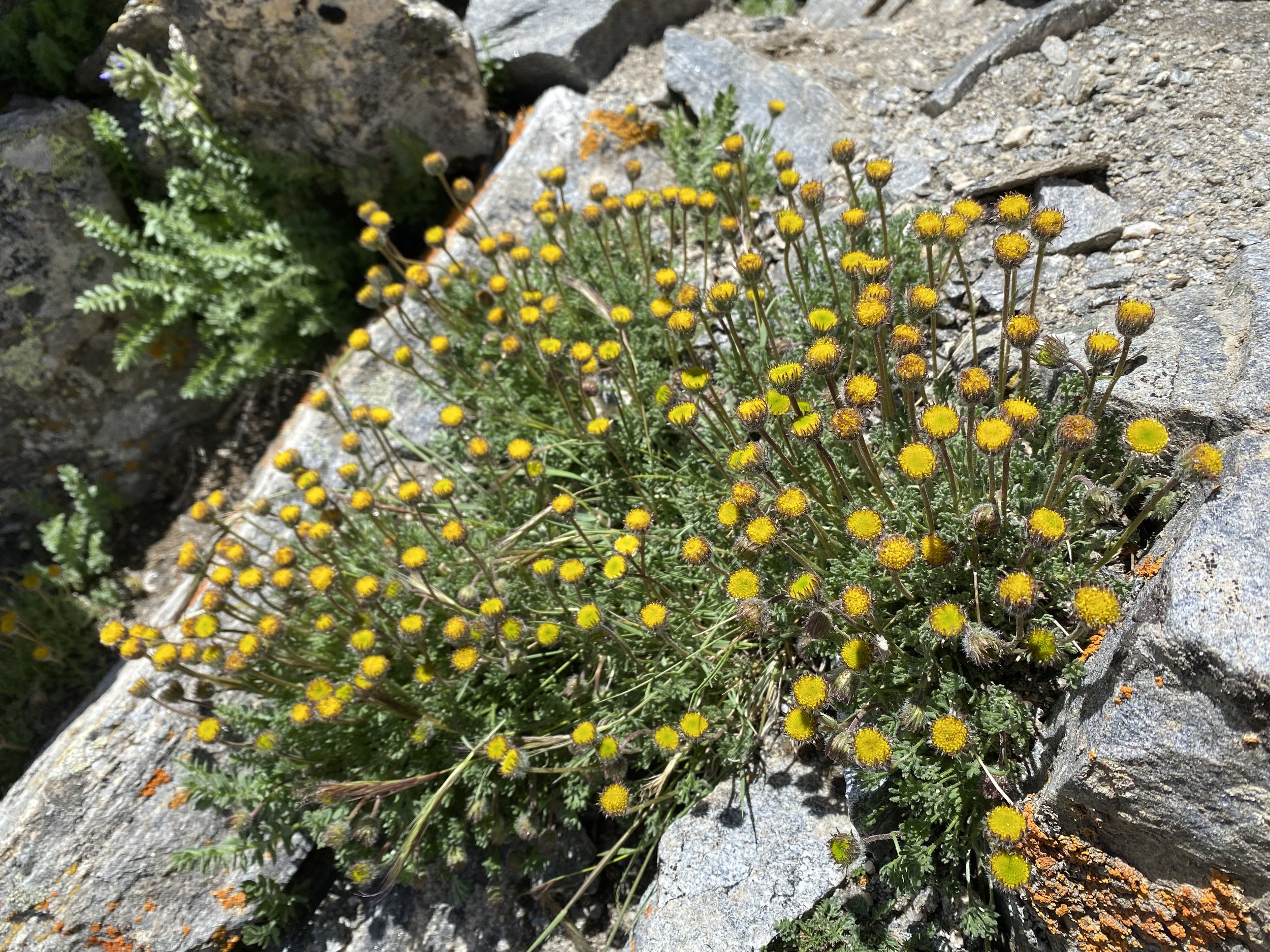
This daisy doesn't like to be pigeon-holed

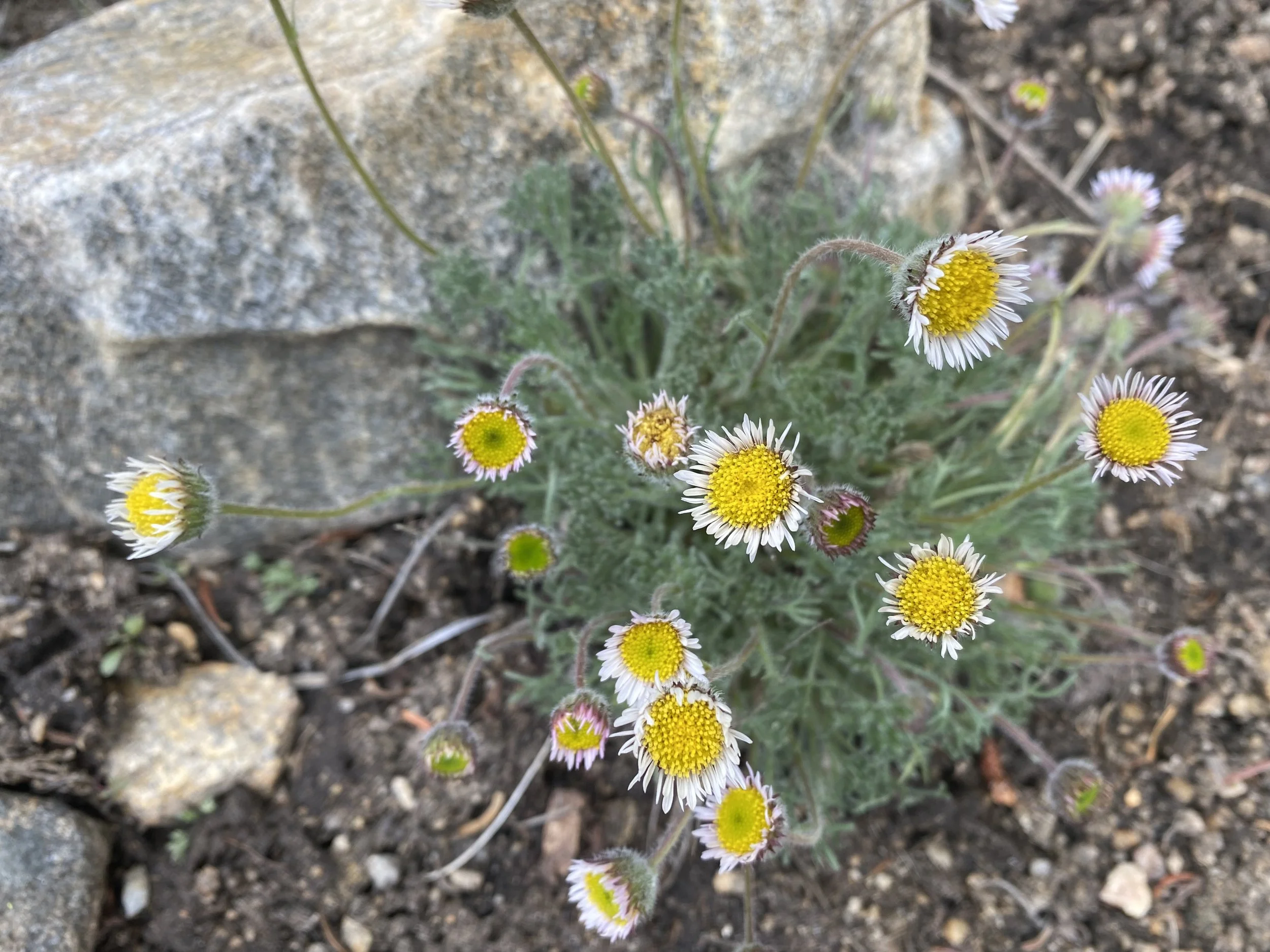
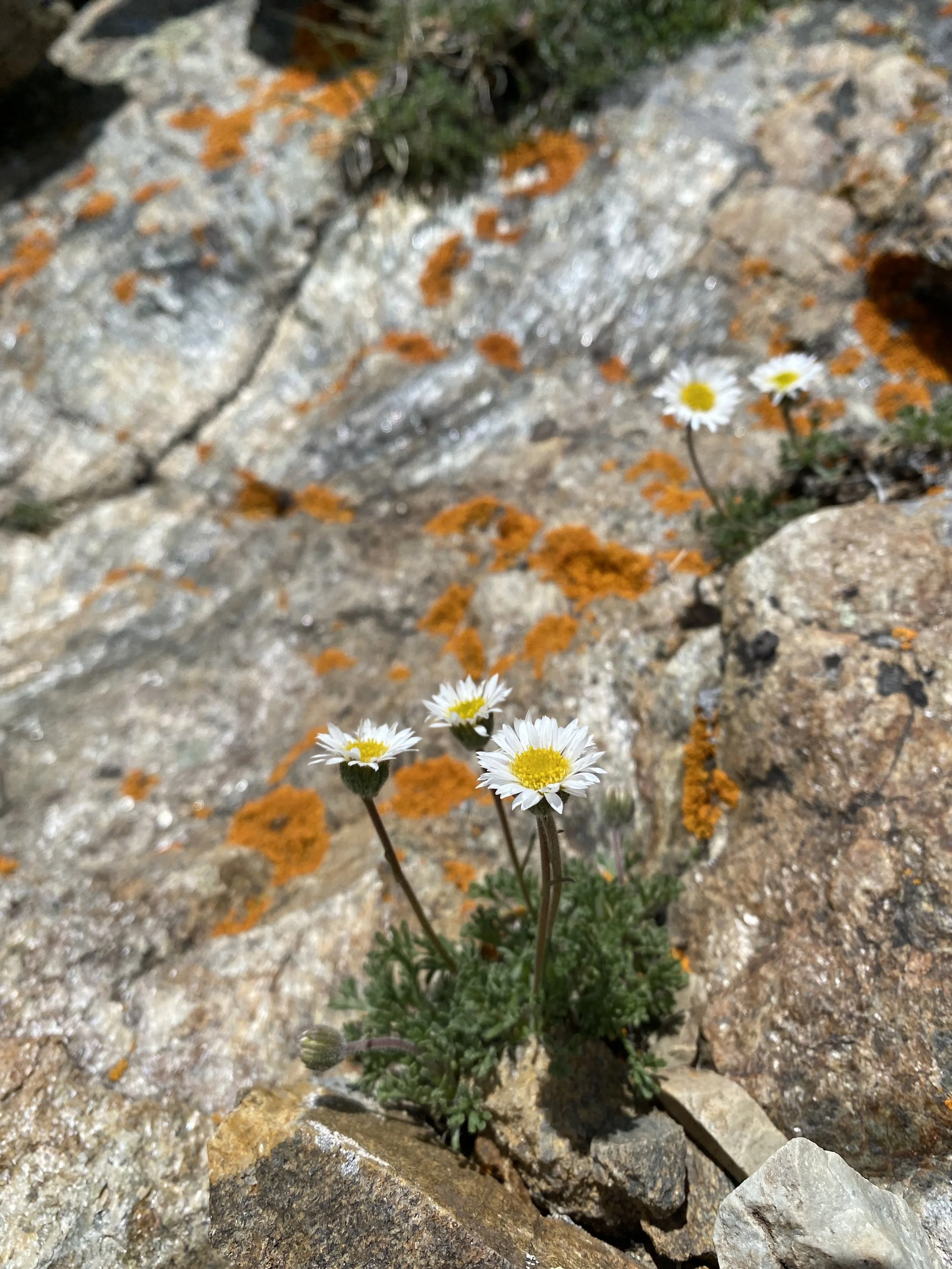
Erigeron compositus, June 3, 2022

E. compositus, near summit, June 7, 202

E. compositus, Geissler, 13,200’, July 7, 2022

Common & scientific name
Cutleaf daisy, Erigeron compositus

Family
Sunflower, Asteraceae

Location
Grottos wall, 9,600’

Fun, weird, helpful, or little known fact

Cutleaf daisy’s petals—or more properly speaking, its ray flowers, as all individual daisy flowers are composed of multiple ray flowers (the petal-looking parts) and/or disk flowers (which together make up the button-looking part)—can be white, pink, or light blue.  They can also be absent entirely, leaving a head with only yellow disk flowers (see photo below).

E. compositus, Geissler, 13,000’, July 7, 2022

Berry yummy!

Ribes cereum, June 3, 2022

Common & scientific name
Wax currant, Ribes cereum

Family
Currant, Grossulariaceae

Location
Grottos climbing wall, 9,750’

Fun, weird, helpful, or little known fact

Ribes is native to western North America.  R. cereum’s edible berries are soft and juicy, with a mild but fruity taste.  Unlike other area species of Ribes, its berries are smooth—try one later in the summer!

Beauty subjective

Descurainia incisa, June 2, 2022

Common & scientific name
Mountain tansymustard, Descurainia incisa

Family
Mustard, Brassicaceae

Location
Aspen grove, 8,700’

Fun, weird, helpful, or little known fact
Yes, it’s weedy looking, tall and stringy, but it’s native, it’s edible, and it’s part of the great floral melting pot!

Distinguish Descurainia species by their siliques (seed pods), as seen on the photo below, and their leaves, using a good key by Weber or Ackerman. I won’t bore you with how I arrived at D. incisa . . .

Visualize whirled peas

Lathyrus lanszwertii, June 2, 2022

L. lanszwertii, June 16, 2022

Common & scientific name
Lanszwert’s pea, Lathyrus lanszwertii

Family
Pea, Fabaceae

Location
Aspens roadside, 8,600’

Fun, weird, helpful, or little known fact

A common peavine found everyone on the Pass below treeline, especially in Aspen forests and open meadows.  White with a hint of pink or purple guide lines, it turns rust-colored with age.

Cinquefoil #2

Potentilla glaucophylla, May 31, 2022

P. glaucophylla, leaf, May 31, 2022

Common & scientific name
Blue-leaf cinquefoil, Potentilla glaucophylla

Family
Rose, Rosaceae

Location
Independence ghost town, 10,800’

Fun, weird, helpful, or little known fact
Blue-leaf cinquefoil is very common in the subalpine and alpine on the Pass. It has 5 to 7 leaflets arranged palmately, like the fingers of a hand connected in the middle. The leaves are green, with a bluish tint, on both sides (with the backside a bit less blue-green, but neither side is hairy). Its leaflets are serrate, or toothed, but not for the whole length of the leaf (see photo of leaf bottom left).

Yellow to the west, lavender to the east

Erysimum capitatum, May 31, 2022

E. capitatum, upper Lost Man, June 7, 2022

Common & scientific name
Western wallflower, Erysimum capitatum

Family
Mustard, Brassicaceae

Location
Ghost town, 10,700’

Fun, weird, helpful, or little known fact

This big, cheery mustard is as at home on the summit of Independence Pass as it is in the deserts of Utah.  It is most commonly yellow, but on the east side of the Pass, especially up near treeline, it is a striking lavender-magenta: photo to come!

Berry uncertain

Lonicera involucrata, May 31, 2022

L. involucrata, Halfmoon Lakes trail, 10,600’ June 18, 2022

Common & scientific name
Twinberry, Lonicera involucrata

Family
Honeysuckle, Caprifoliaceae

Location
Difficult Campground, 8,100’

Fun, weird, helpful, or little known fact
From the USDA’s Plant Fact Sheet:  “Reports on the fruit vary from poisonous, to mildly toxic, to bitter and unpalatable, to edible and useful as food, depending on tribe, region or publication.”  Got it?  In any event, its twin berries are eaten by bears, small mammals, quail, grouse, and songbirds such as thrushes.  So be safe and leave it be!

L. involucrata in fruit, Weller Lake, 9,600’, July 20, 2022

Orphan #2

Mainthemum stellatum, May 31, 2022

Common & scientific name
Starry false lily of the valley, Maianthemum stellatum

Family
??? (see below)

Location
Between the winter gate and Weller, 8,750’

Fun, weird, helpful, or little known fact

Loves aspen groves above all, more delicate in its flower than its close relative, Maianthemum racemosum, False Solomon’s seal, and searching for a loving home.  Different authorities place it in no less than four families or subfamilies: (1) Liliaceae, Lily, (2) Convallariaceae, Mayflower, (3) Asparagaceae, Asparagus, and (4) Ruscaceae, also Asparagus. Confused yet?  Give it ten years and the experts will land on one!

Let me paint you the scene . . .

Castilleja miniata, May 31, 2022

C. miniata, upper Lost Man, 11,600’, July 7, 2022

Common & scientific name
Red paintbrush, Castilleja miniata

Family
Broomrape, Orobanchaceae

Location
Roadside, 9,200’

Fun, weird, helpful, or little known fact

Paintbrushes owe their lovely coloring not to their flowers, but to their bracts, specialized leaves which in this case are red (or orange, or deep red, or . . . ).  This species of paintbrush is thought to be the second most widely distributed paintbrush in the world

C. miniata, Top Cut 12,100’, July 14, 2022

Give it a nod

Microseris nutans, May 31, 2022

Common & scientific name
Nodding microseris, Microseris nutans

Family
Sunflower, Asteraceae

Location
Difficult Trail, 8,200’

Fun, weird, helpful, or little known fact
This short-lived, early-blooming sun lover can be distinguished from Taraxacum officinale, Dandelion, by its phyllaries—the bracts, or much-reduced leaves, subtending the flower head of members of the sunflower family. Nodding microseris’s phyllaries cup the flower head tightly, while Dandelion’s curl outward at the tips. Nodding microseris’s phyllaries also distinguish it from its lookalike, Agoseris glauca, the former having tiny black hairs on them.

Waiting for the wolves

Ribes wolfii, May 31, 2022

Common & scientific name
Wolf’s currant, Ribes wolfii

Family
Gooseberry, Grossulariaceae

Location
Difficult Campground, 8,200’

Fun, weird, helpful, or little known fact
This common currant is the only Ribes in our area without spines. Unfortunately, its berries are small, spiny-hairy, and bitter—no need for protection!

Stars of the forest

Aquilegia elegantula, May 31, 2022

A. elegantula, Halfmoon Lakes trail, 10,600’, June 18, 2022

Common & scientific name
Western red columbine, Aquilegia elegantula

Family
Buttercup, Ranunculaceae

Location
Difficult Trail , 8,200’

Fun, weird, helpful, or little known fact

Nothing lights up a speckled woods like these dazzling red rockets.  They are often found in large groups, and in the same location as fairy slippers.  Look for both in early summer before they’re gone!

In search of family

Maianthemum racemosum, May 31, 2022

Common & scientific name
Large false Solomon’s seal, Maianthemum racemosum

Family
??? (see below)

Location
Difficult Campground, 8,200’

Fun, weird, helpful, or little known fact

Loves aspen groves above all, less delicate in its flower than its close relative, Maianthemum stellatum, False Solomon’s seal, and searching for a loving home.  Different authorities place it in no less than four families or subfamilies: (1) Liliaceae, Lily, (2) Convallariaceae, Mayflower, (3) Asparagaceae, Asparagus, and (4) Ruscaceae, Butcher’s Broom. Confused yet?  Give it ten years and the experts will land on one!

I am not a sham

Pseudocymopterus montanus, May 31, 2022

Common & scientific name
Mountain parsley, Pseudocymopterus montanus

Family
Parsley, Apiaceae

Location
Lower Lost Man, 10,500’

Fun, weird, helpful, or little known fact

This common parsley, seen at every elevation on the Pass, gives scientists fits because of its morphological variability and differences of opinion as to how it should be classified, both genus and species-wise.  But it’s one of our easier plants to identify: it has carrot-like leaves and it’s yellow, unlike any other parsleys on the Pass, which are all white (EXCEPT Alpine parsley, Oreoxis alpina, which is mat-forming and much tinier in all aspects than Mountain parsley, and Eastwood’s woodroot, Podistera eastwoodiae ).

A frog's best friend

Ranunculus glaberrimus, May 31, 2022

Common & scientific name
Sage buttercup, Ranunculus glaberrimus

Family
Buttercup, Ranunculaceae

Location
Grottos, 9,600’

Fun, weird, helpful, or little known fact
The genus “Ranunculus” comes from the Latin for “little frog,” since buttercups are often found in wet habitats (this one, not so much). Sage buttercup is one of the first flowers to bloom in the spring, and often has a scraggly, de-petaled appearance, possibly owing to foraging by hungry spring critters, possibly to every-changing spring weather, or . . . other theories welcome!

A slender fella

Boechera lignifera, May 31, 2022

Common & scientific names
Desert rockress, Boechera lignifera

Family: Mustard, Brassicaceae

Location: Weller Curve, 9,200’

Fun, weird, helpful, or little known fact

”The taxonomic complexity of the Boechera genus is legendary,” proclaims the Flora of North America. Truer words have never been spoken. Telling the different species apart requires examining the plant’s hairs under a microscope, along with the shape and length of its silique (seed pod). “A rare confluence of hybridization, apomixis, and polyploidy makes Boechera one of the most difficult genera in the North American flora.” Having examined all parts of this delightful, delicate spring flower, I am putting my money for the moment on B. lignifera. However, I will need to wait until it goes to seed to examine its silique for certainty. And even then . . .