July 2025

What a big mouth

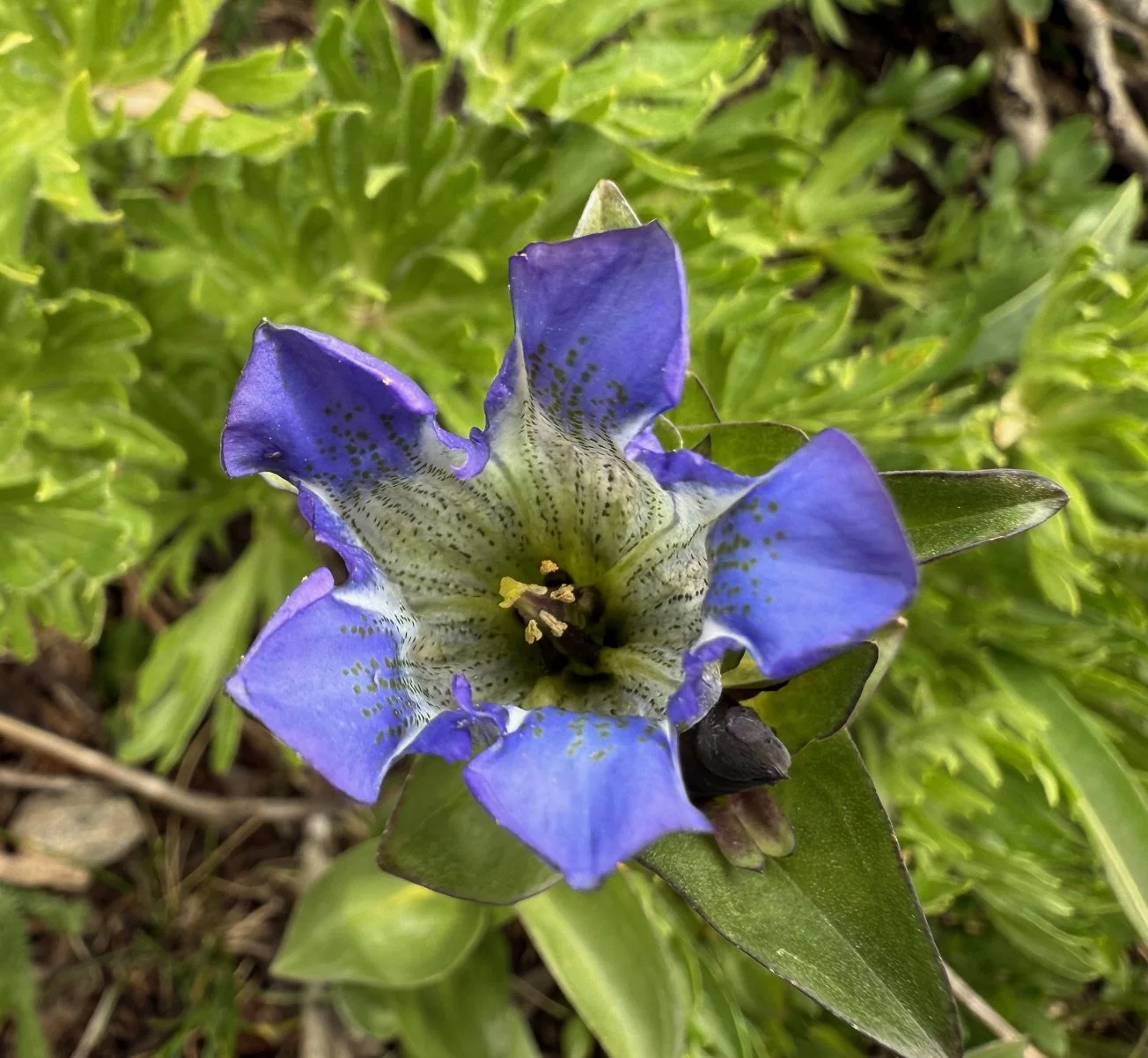
Gentiana parryi, July 29, 2025

Common & scientific name

Bottle gentian, Gentiana parryi

Family

Gentian, Gentianaceae

Location

Linkins Lake Trail, 11,800’

Fun, weird, helpful, or little known fact

This bright, blue-purple goblet puts out one to a half-dozen blooms per plant (alpine plants tend to have single blooms, lower growing more), opening fully only in sunshine. This and its other purple gentian cousins are some of the last wildflowers to grace the Pass above treeline—enjoy!
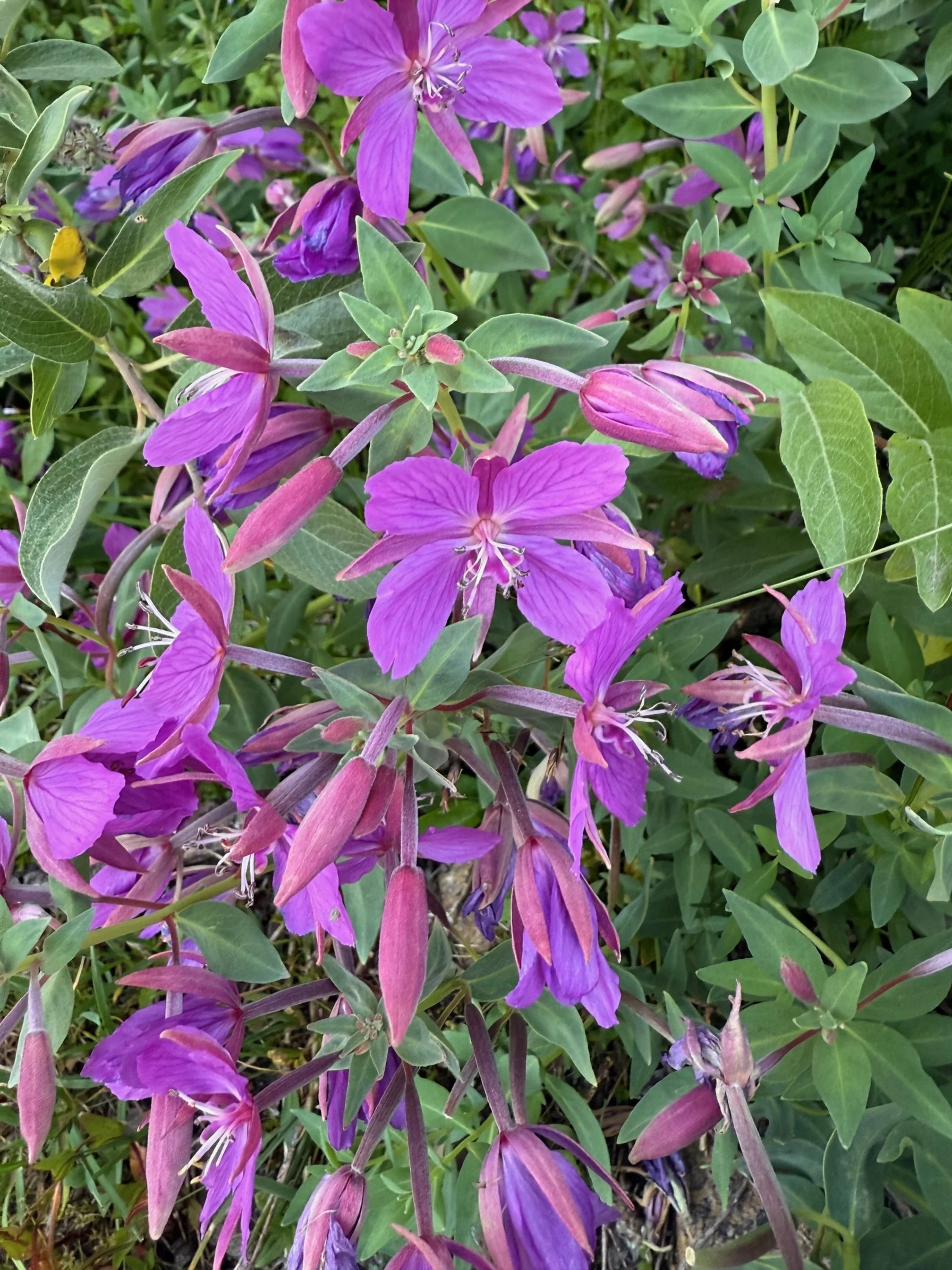
Greenland's national flower

Chamaenerion latifolium, July 28, 2025

Common & scientific name

Dwarf fireweed, Chamaenerion latifolium

Family

Evening primrose, Onagraceae

Location

Roadside, 11,700’

Fun, weird, helpful, or little known fact

Smaller plant and larger flowers than its close cousin, Chamaenerion angustifolium, and won’t be found roadside but rather creekside or ditch-side. It is the national flower of Greenland: good choice, Greenland!

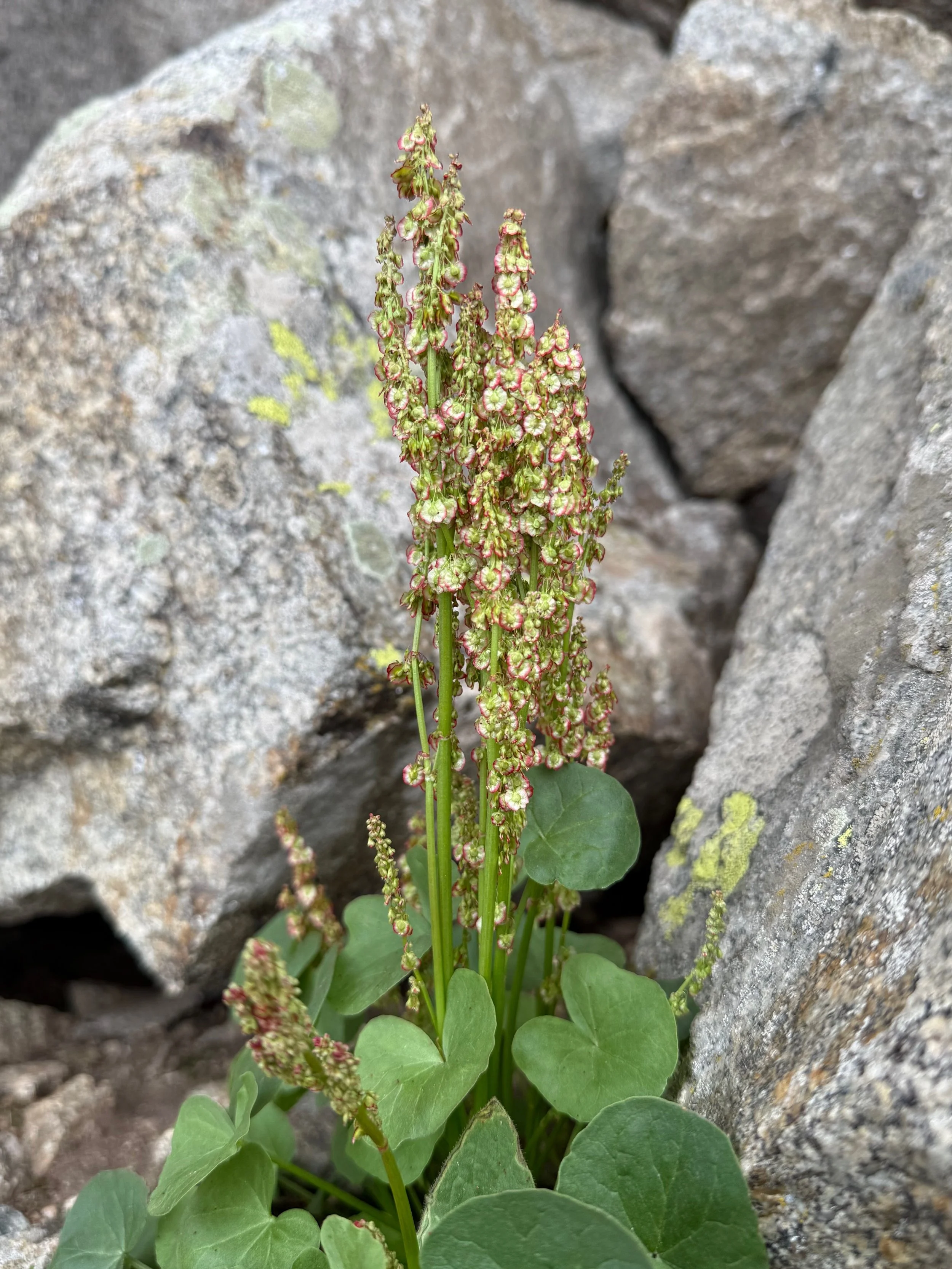
No lemon

Oxyria digyna, July 24, 2025

Common & scientific name

Mountain sorrel, Oxyria digyna

Family

Buckwheat, Polygonaceae

Location

Geissler, 11,200’

Fun, weird, helpful, or little known fact

Heart-shaped leaves and red and green flowers then seeds make this charming alpine plant unmistakeable. The tart, lemony leaves are edible and have been enjoyed by humans and wildlife alike for millennia.

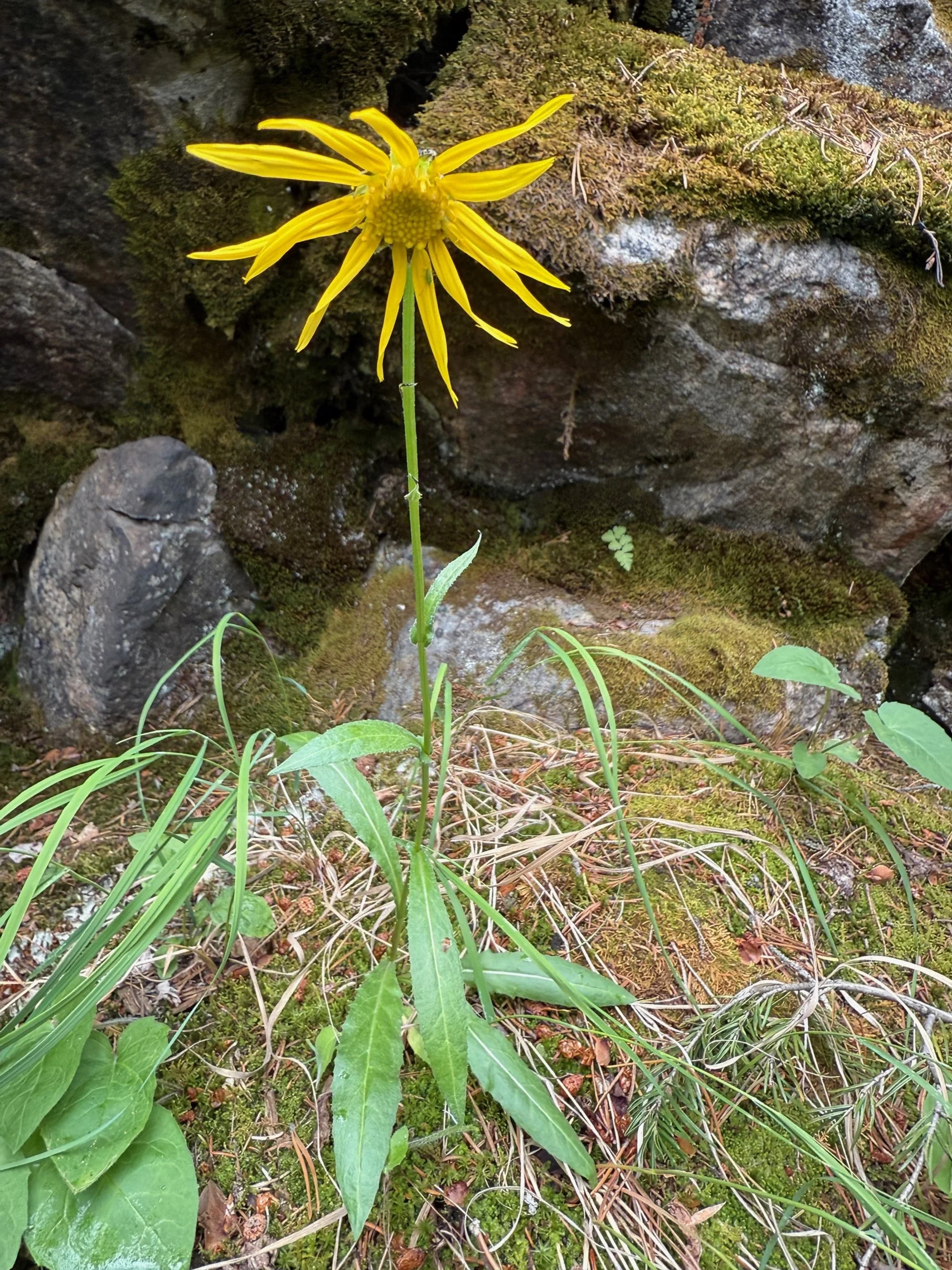
Bad hair day

Senecio amplectens var. amplectens, July 24, 2025

Common & scientific name

Showy alpine ragwort, Senecio amplectens var. amplectens

Family

Sunflower, Asteraceae

Location

Lower Green Mountain, 11,000’

Fun, weird, helpful, or little known fact

I so love this flower! Something about the way its petals bend and fold in different directions, in sometimes scraggly ways, as seen below, and the fact that it appears only occasionally in spruce/fir forests, or below along a steep streambank, makes this flower feel like a friend too rarely seen. A friend calls it the “bad hair day” flower.

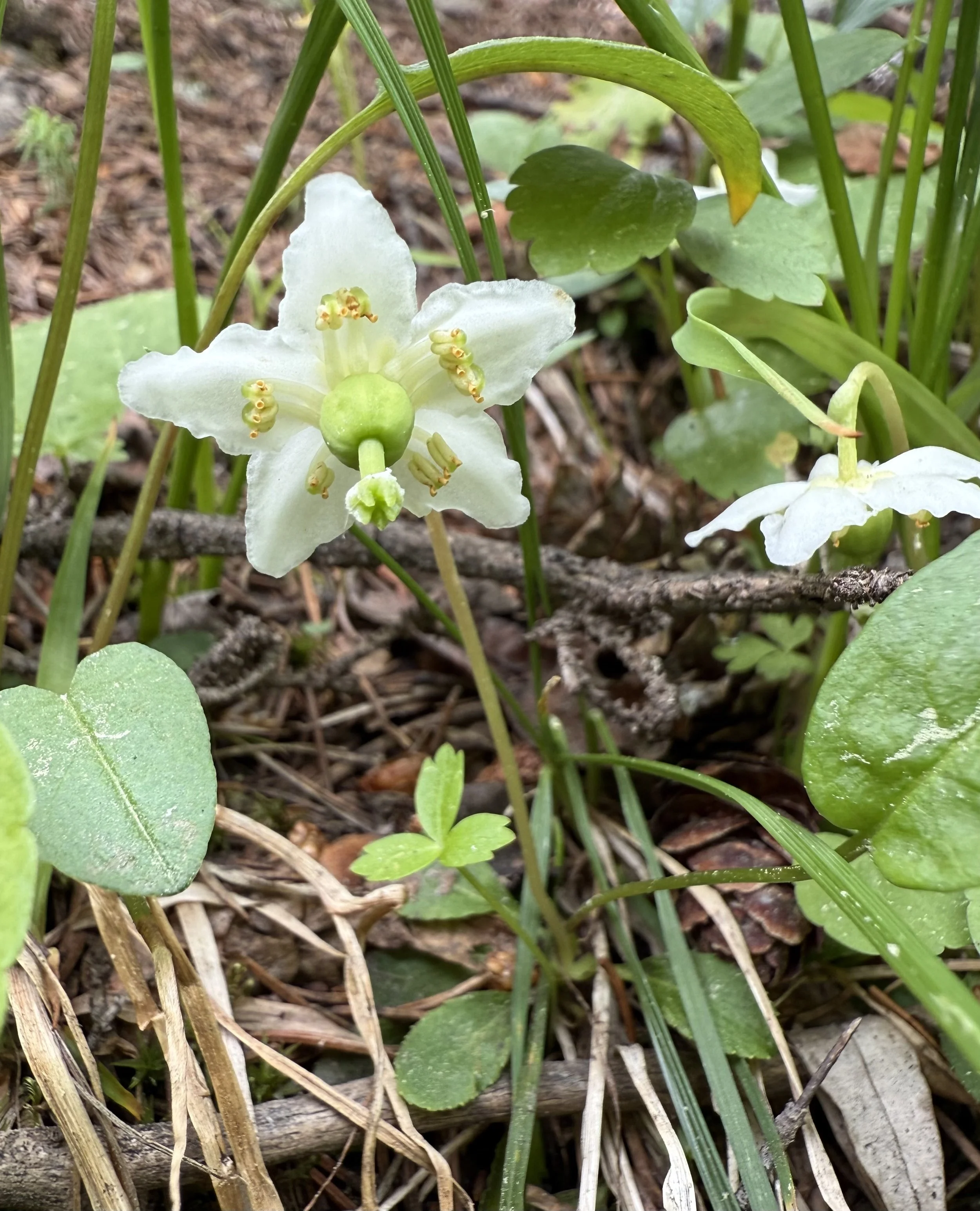
A shy maiden

Moneses uniflora July 22, 2025

Common & scientific name

Wood nymph, Moneses uniflora

Family

Heath, Ericaceae

Location

Roaring Fork River, 10,500’

Fun, weird, helpful, or little known fact

Standing just a few inches off the ground, this perennial favorite’s single, nodding flower hides a clever stigma that can take pollen off the back of a visiting bumblebee after the bee has shaken pollen off the flower’s anthers. Look for this shy beauty in moist spruce-fir woods.

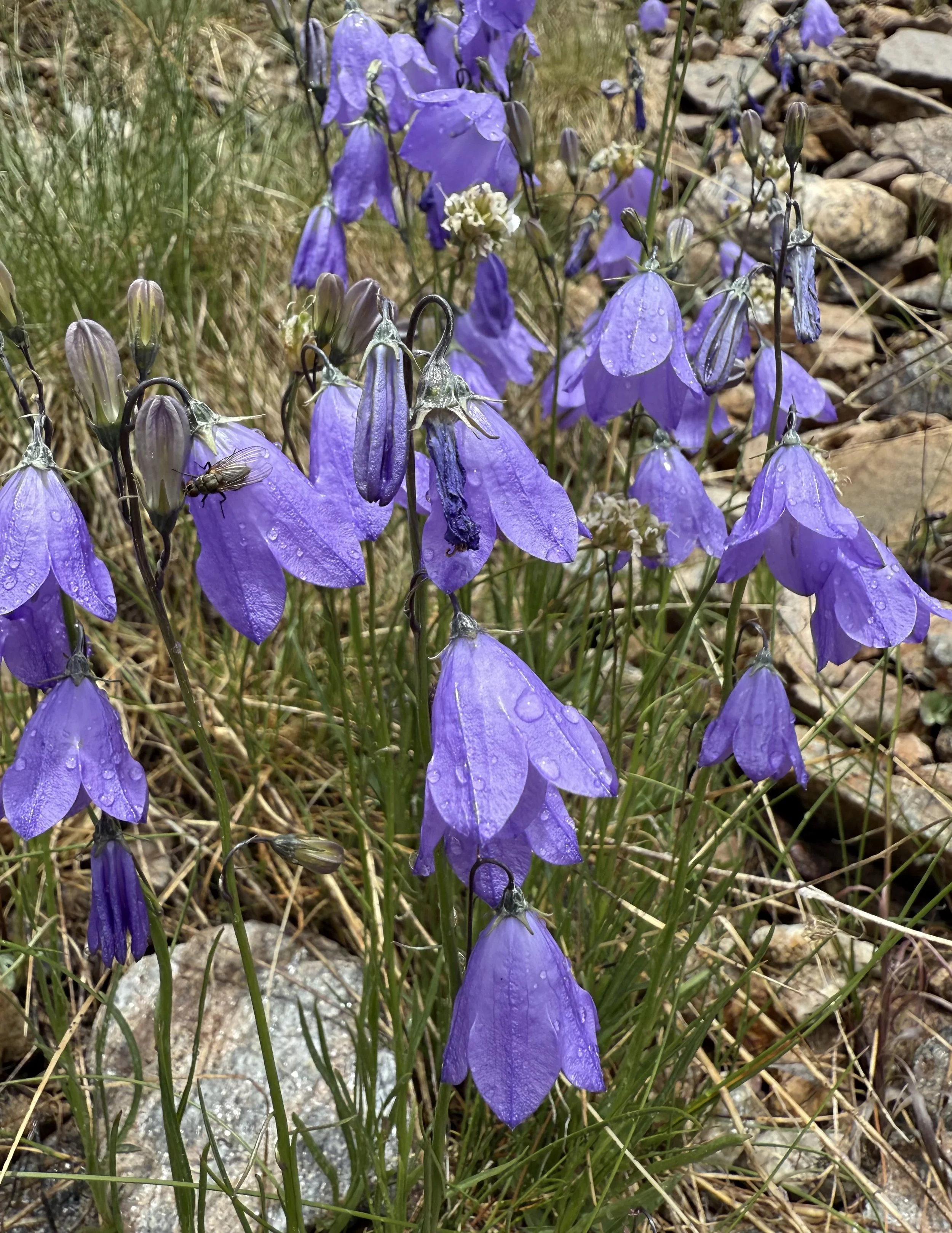
The Scottish bluebell

Campanula rotundiifolia, July 22, 2025

Common & scientific name

Harebell, Campanula rotundifolia

Family

Bellflower, Campanulaceae

Location

Roadside, 10,800’

Fun, weird, helpful, or little known fact

This IS the bluebell of Scotland (not our smaller Mertensia bluebells). The fact that this plant is sometimes found in areas inhabited by hares—rabbits—may explain its common name. It is commonly found on the Pass in the montane and subalpine zones.

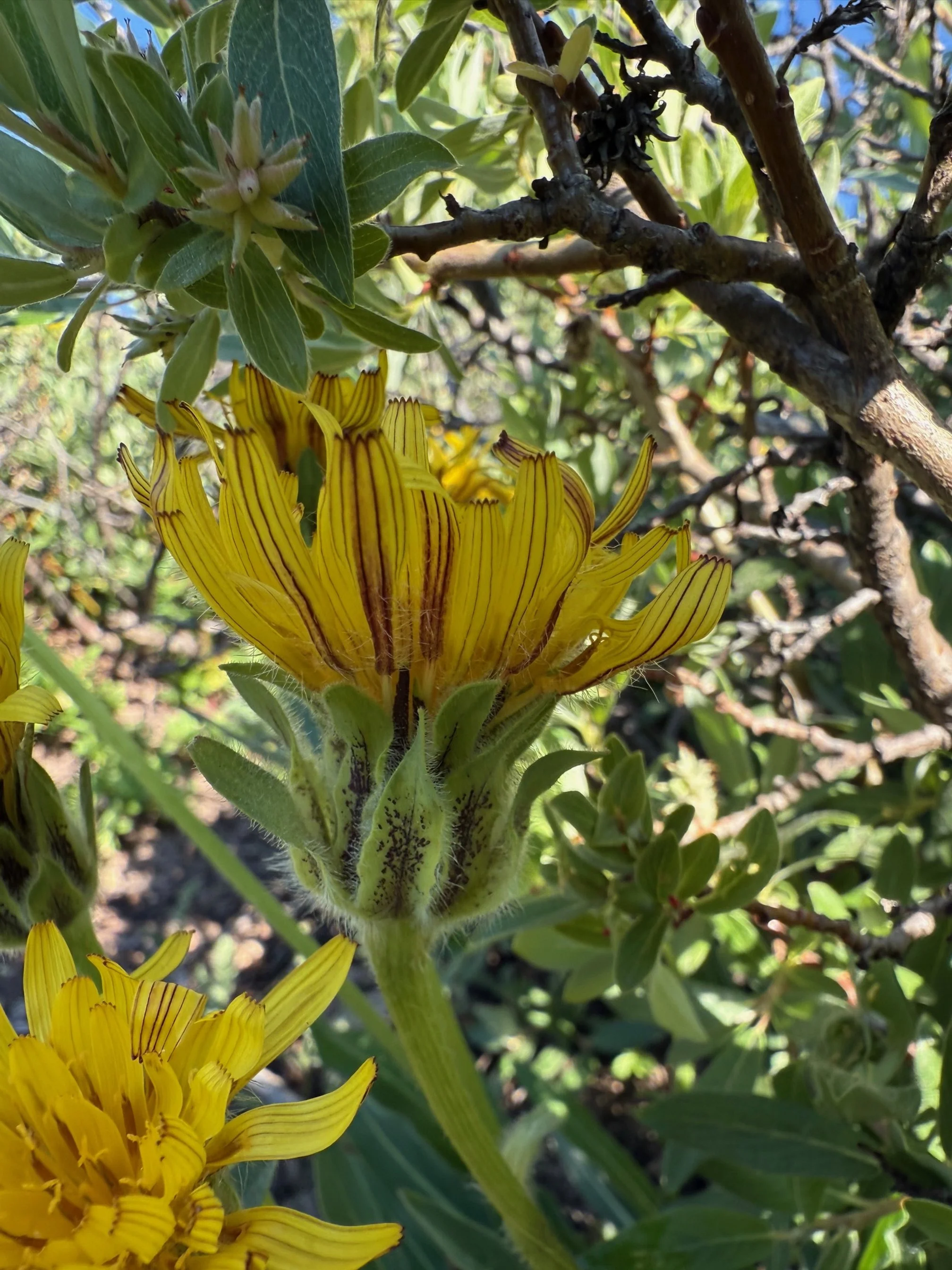
A big fuzz head

Agoseris glauca var. dasycephala, July 15, 2025

Common & scientific name

Pale agoseris, Agoseris glauca var. dasycephala

Family

Sunflower, Asteraceae

Location

Upper Lost Man, 11,700’

Fun, weird, helpful, or little known fact

Much taller than A. glauca, much fuzzier, much bigger head, and found only in the high subalpine or alpine. I love this big fuzz head!

A Colorado native

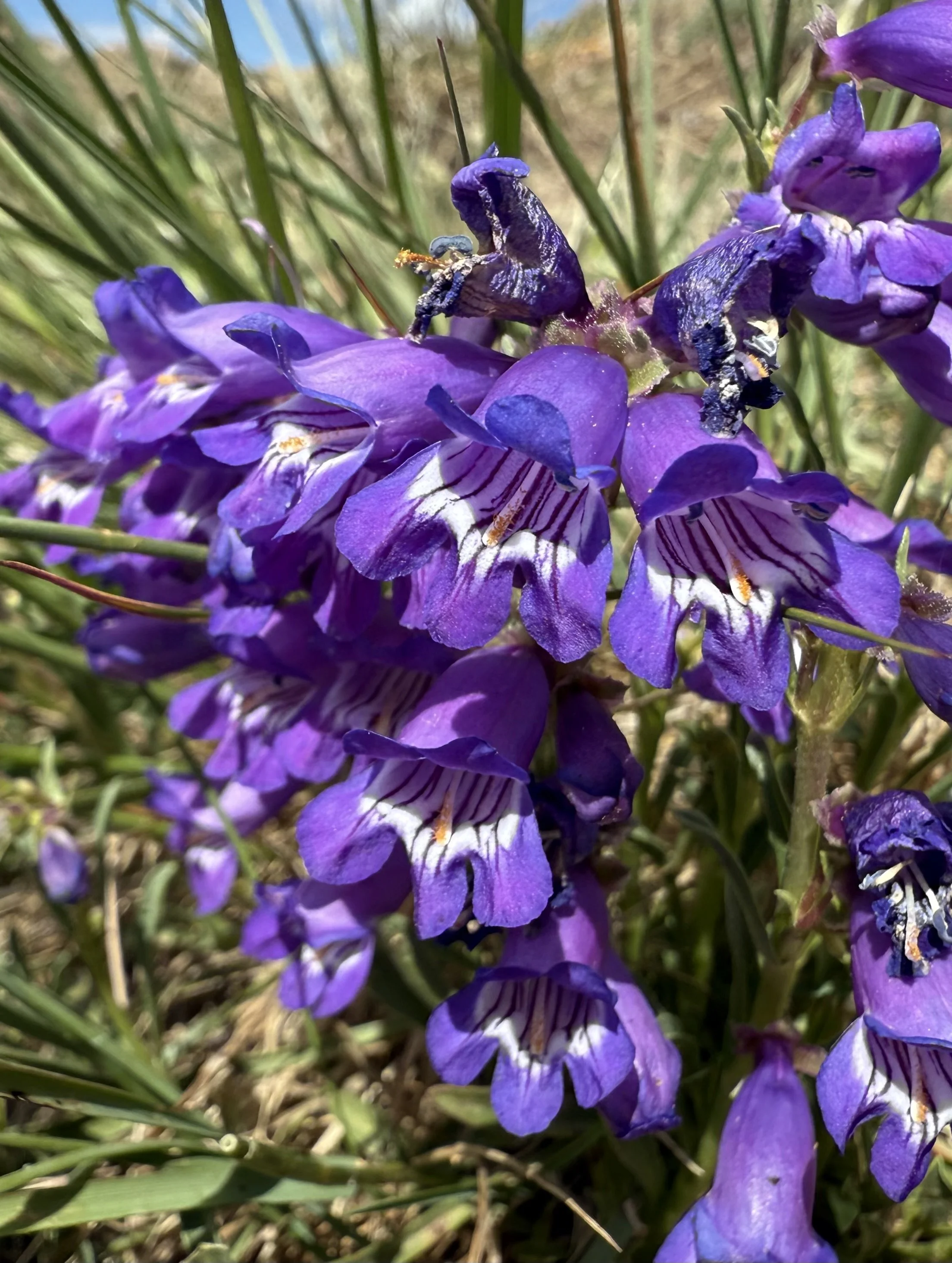
Penstemon hallii, July 10, 2025

Common & scientific name

Hall’s penstemon, Penstemon hallii

Family

Plantain, Plantaginaceae

Location

Summit, 12,100’

Fun, weird, helpful, or little known fact

A true blue (well, magenta-purple) Colorado native, this brilliant wildflower, large for the tundra, is found mostly near the Continental Divide and nowhere else on the planet—lucky us! Don’t miss its brief stay.

A smallest, sweetest saxifrage

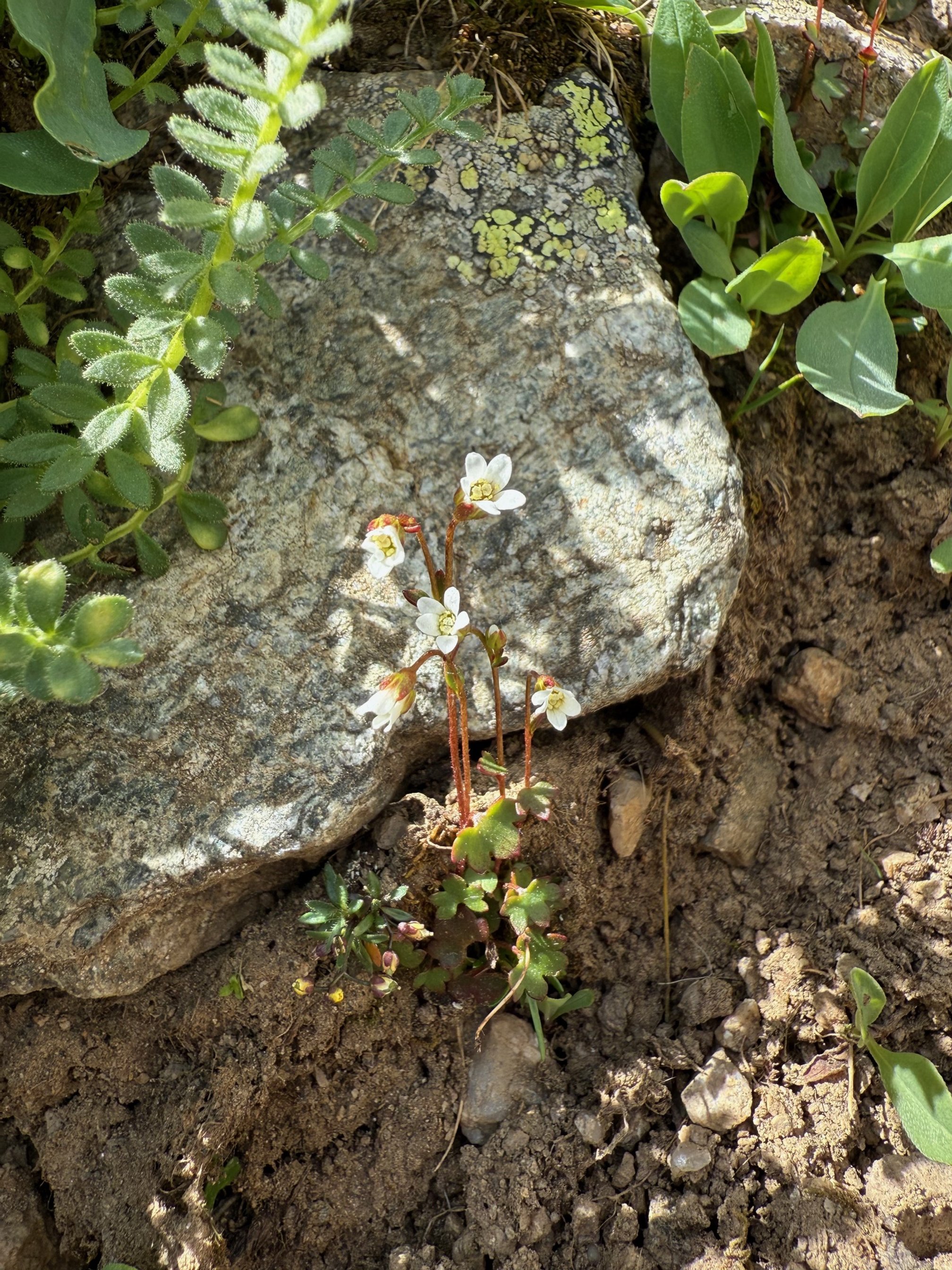
Saxifrage hyperborea, July 9, 2025

Common & scientific name

Alpine saxifrage, Saxifraga hyperborea

Family

Saxifrage, Saxifragaceae

Location

Ruby, 12,500’

Fun, weird, helpful, or little known fact

This total jewel of a flower, also known as “pygmy saxifrage,” is almost always found tucked into wet caves and boulder-created crevasses. It stands just three inches high, is usually single-flowered, has adorably-lobed leaves, and is guaranteed to make your day. Never let rock gardens go unexplored: treasures await!

An angelic carrot

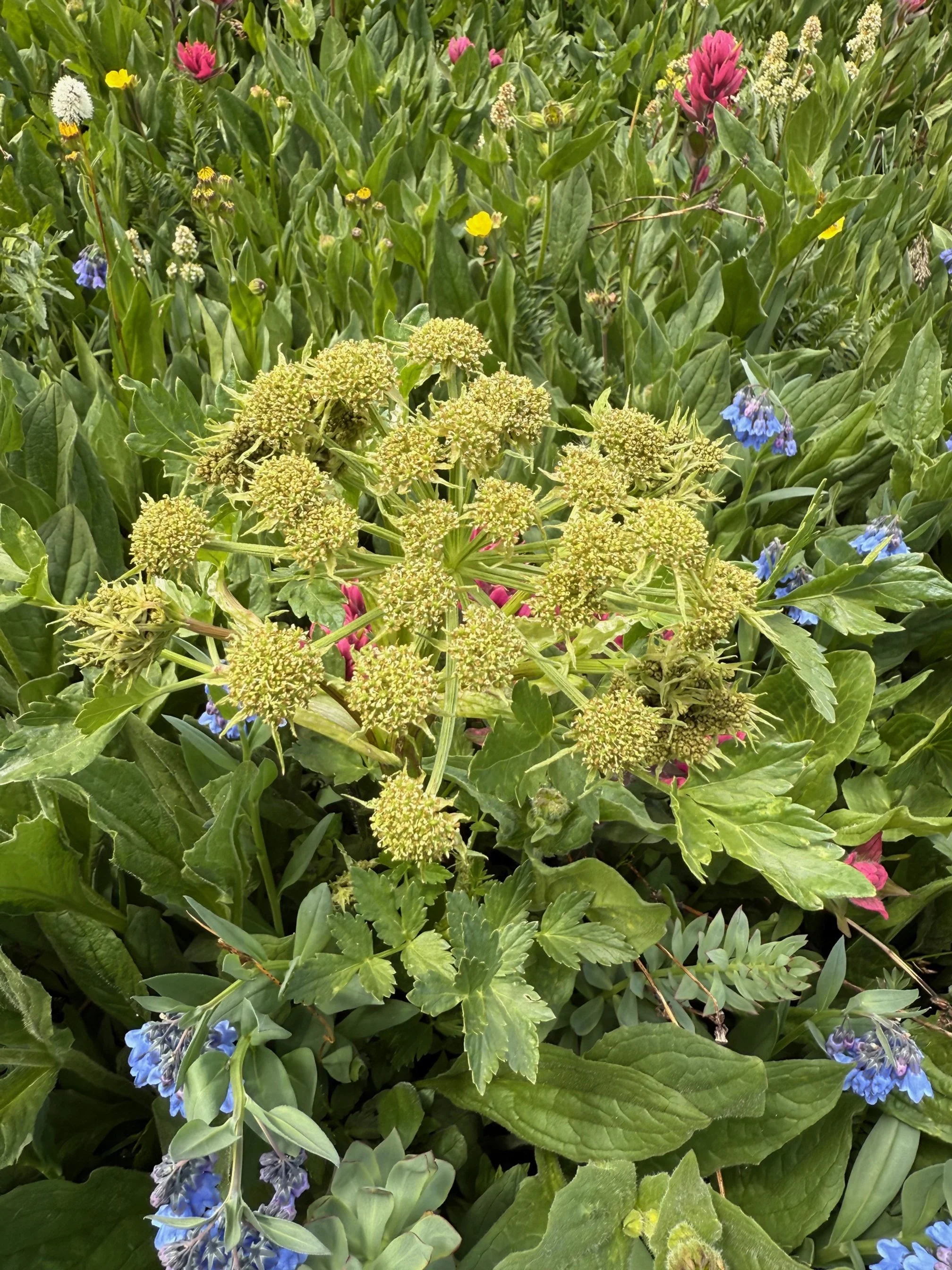
Angelica grayi, July 9, 2025

Common & scientific name

Gray’s angelica, Angelica grayi

Family

Parsley, Apiaceae

Location

Ruby, 12,000

Fun, weird, helpful, or little known fact

This alpine carrot is unmistakeable, with its large umbel of greenish flowers and overall stocky demeanor. It is usually found high on the Pass near water in the company of many other flowers and grasses.

A skunk never smelled so sweet

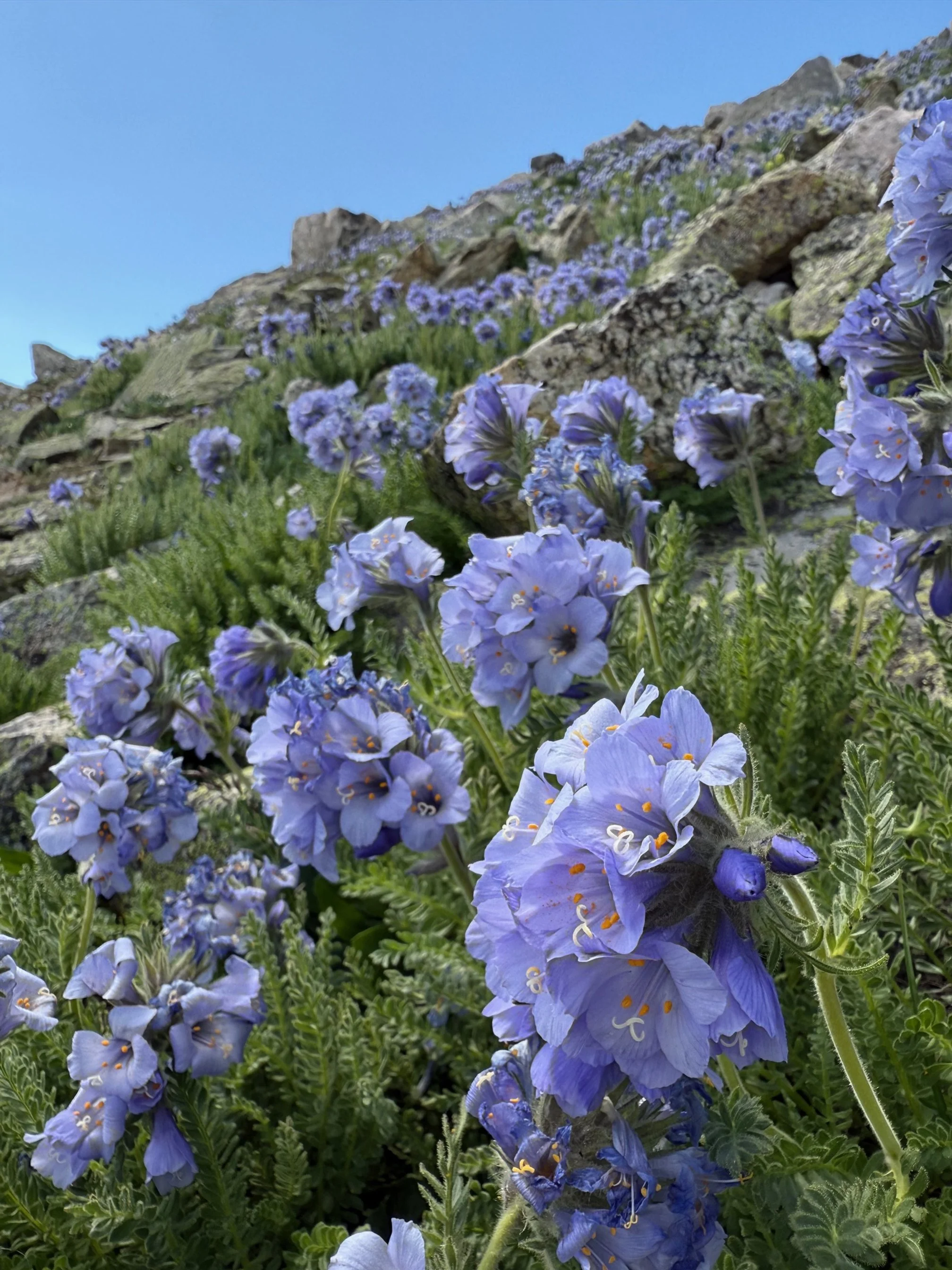
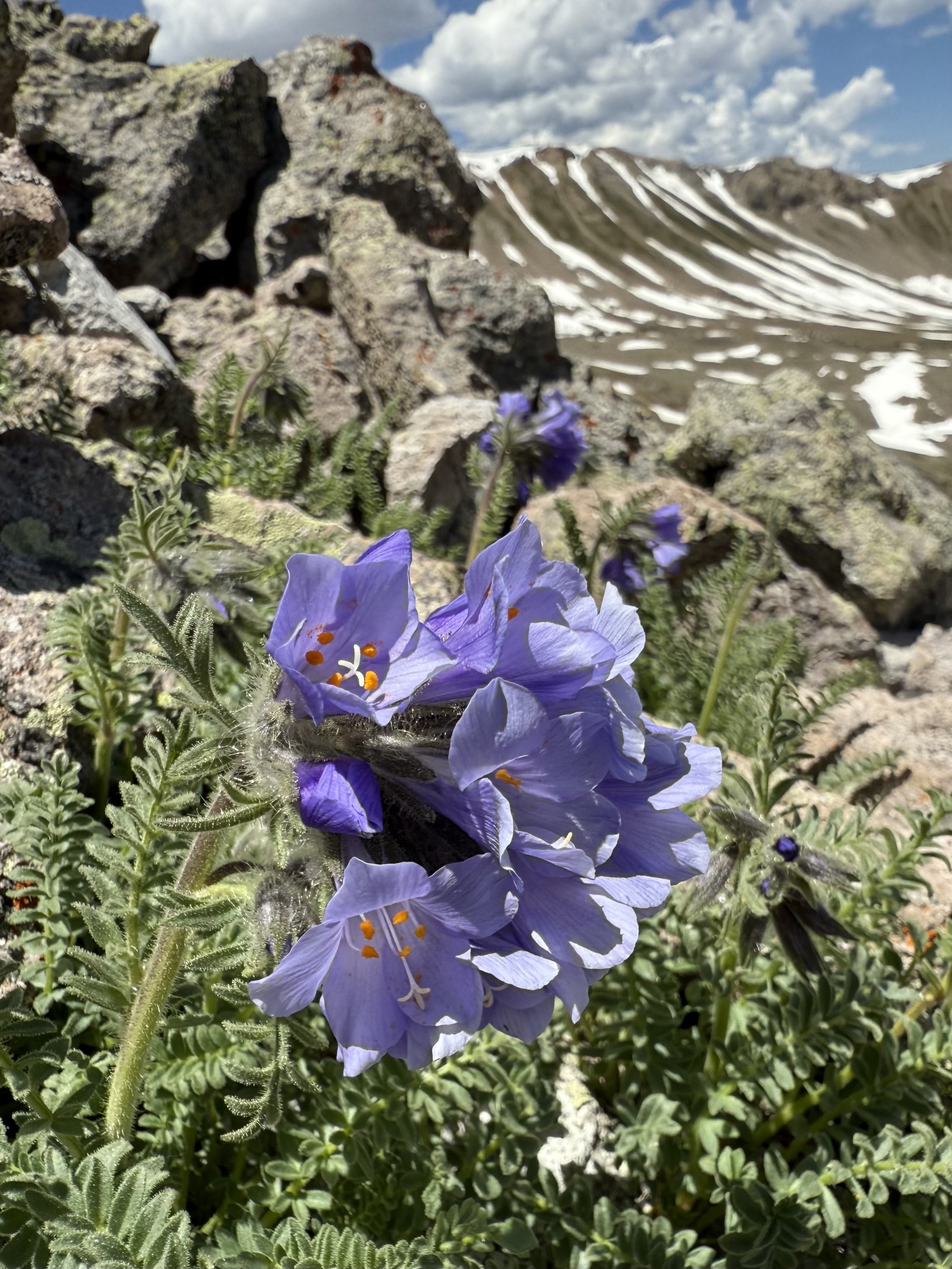
Polemonium confertum, July 9, 2025

Mountain Boy, July 2, 2025

Species

Rocky Mountain sky pilot, Polemonium confertum

Family

Phlox, Polemoniaceae

Location

Ruby, 12,500’

Fun, weird, helpful, or little known fact

If you’ve ever been scrambling along a rocky alpine ridge and swore you smelled a skunk, you were (sort of) correct! Sky pilot, a common but striking tundra flower, sometimes goes by the name “Skunkweed,” owing to the strong odor it sometimes puts out.

Fuzzy, wasn't he?

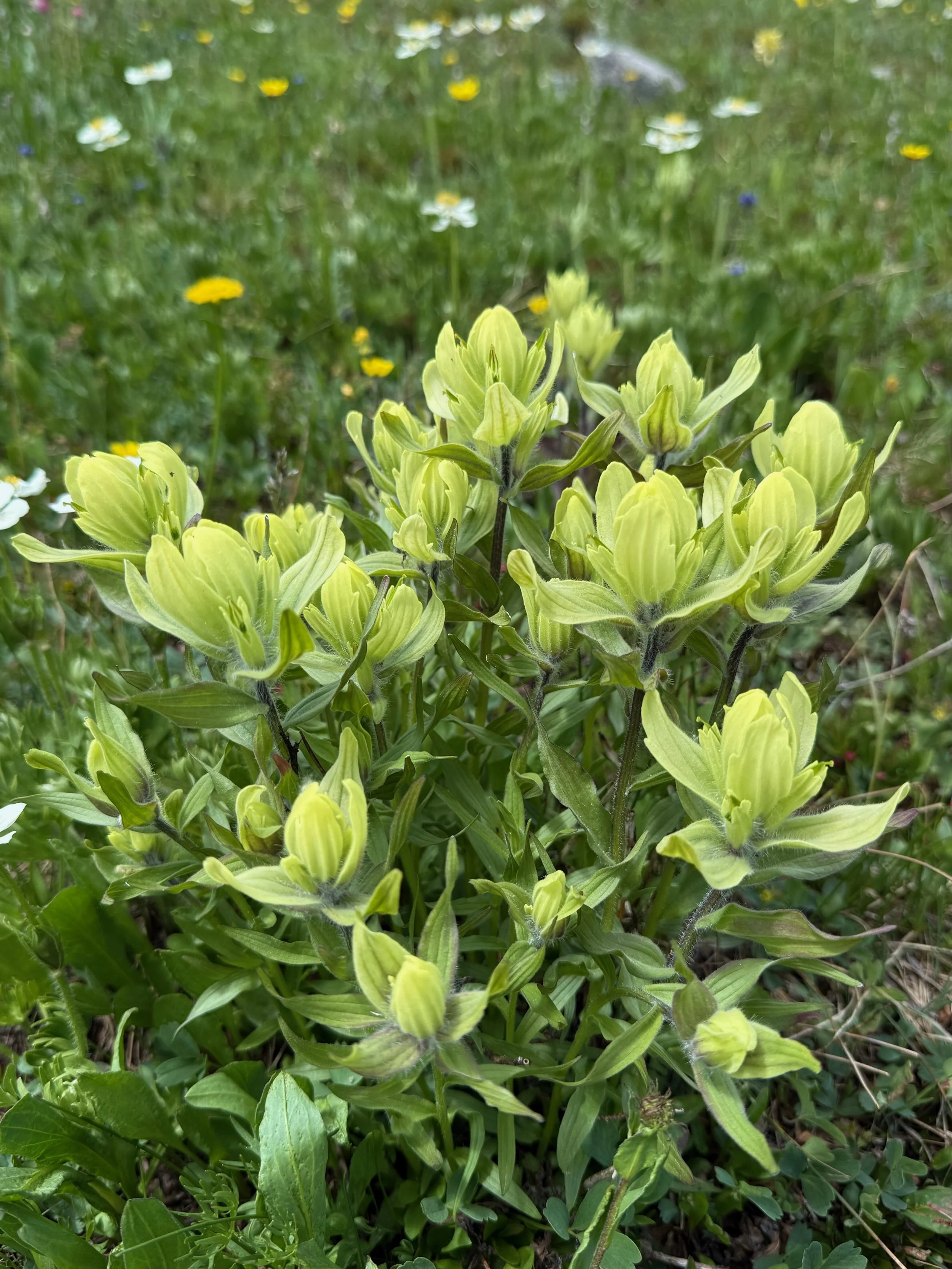
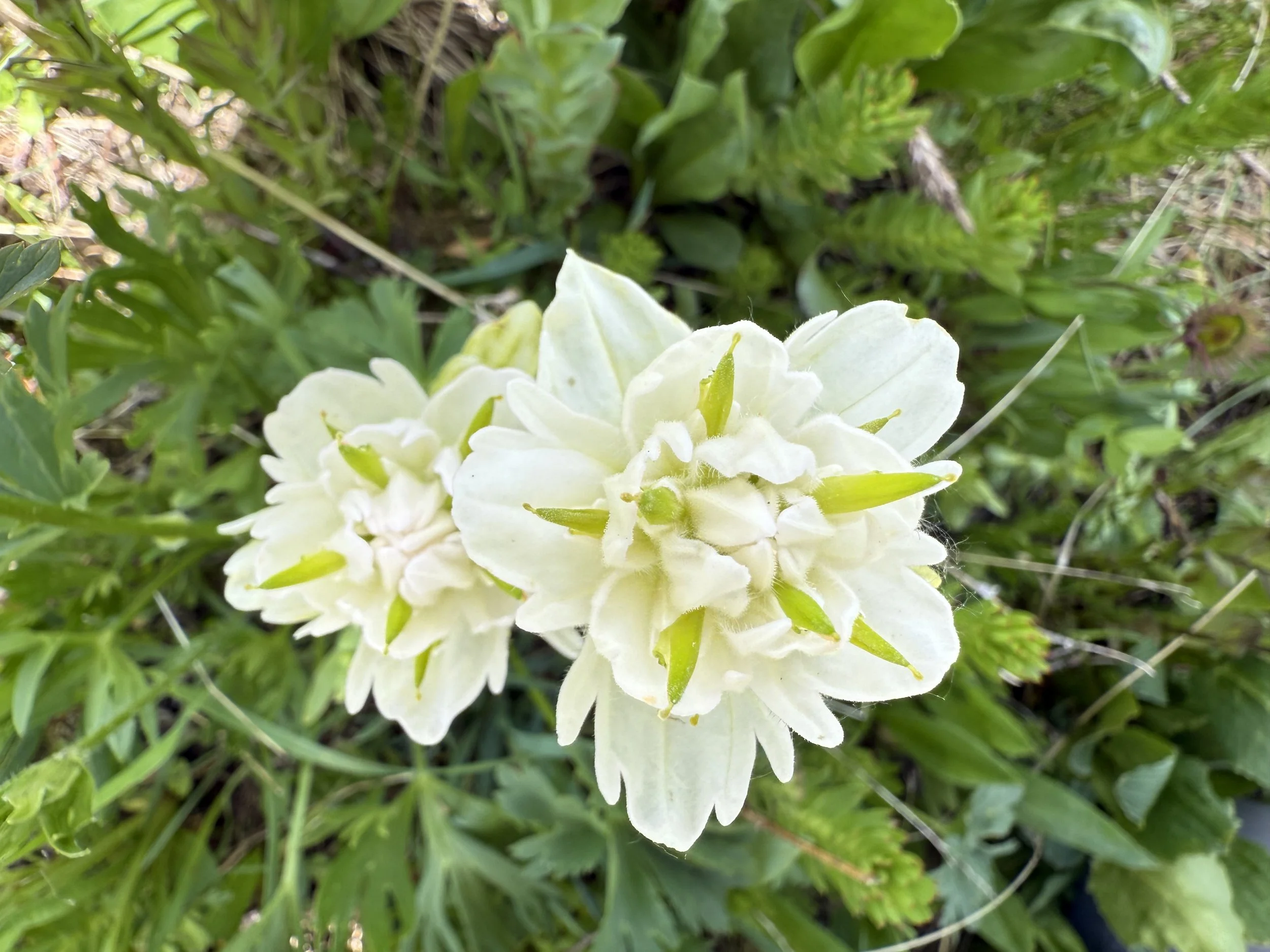
Castilleja occidentalis, July 9, 2025

Same

Common & scientific name

Western Indian paintbrush, Castilleja occidentalis

Family

Broomrape, Orobanchaceae

Location

Ruby, 12,000’

Fun, weird, helpful, or little known fact

What a wonderful alpine fuzzball this is! Especially when it hybridizes with other paintbrushes like the magenta C. rhexifolia to create tie-dyed, striped wonders (note that not all botanists agree these hybridize: some argue for separate speciation).

While there is much discussion among botanists about the proper classification of paintbrushes, including the genetic difference (if any) between C. occidentalis and the similarly yellowish-white C. sulphurea (also called C. septentrionalis), the two are readily distinguishable in the field by their elevation (C. occidentalis is an alpine plant, C. sulphurea is found lower), their size (C. occidentalis is shorter), and their fuzziness factor (C. occidentalis wins!) It also crosses with other high-elevation Castillejas like C. rhexifolia and C. miniata to create colorful, striped versions

Pioneer Pea

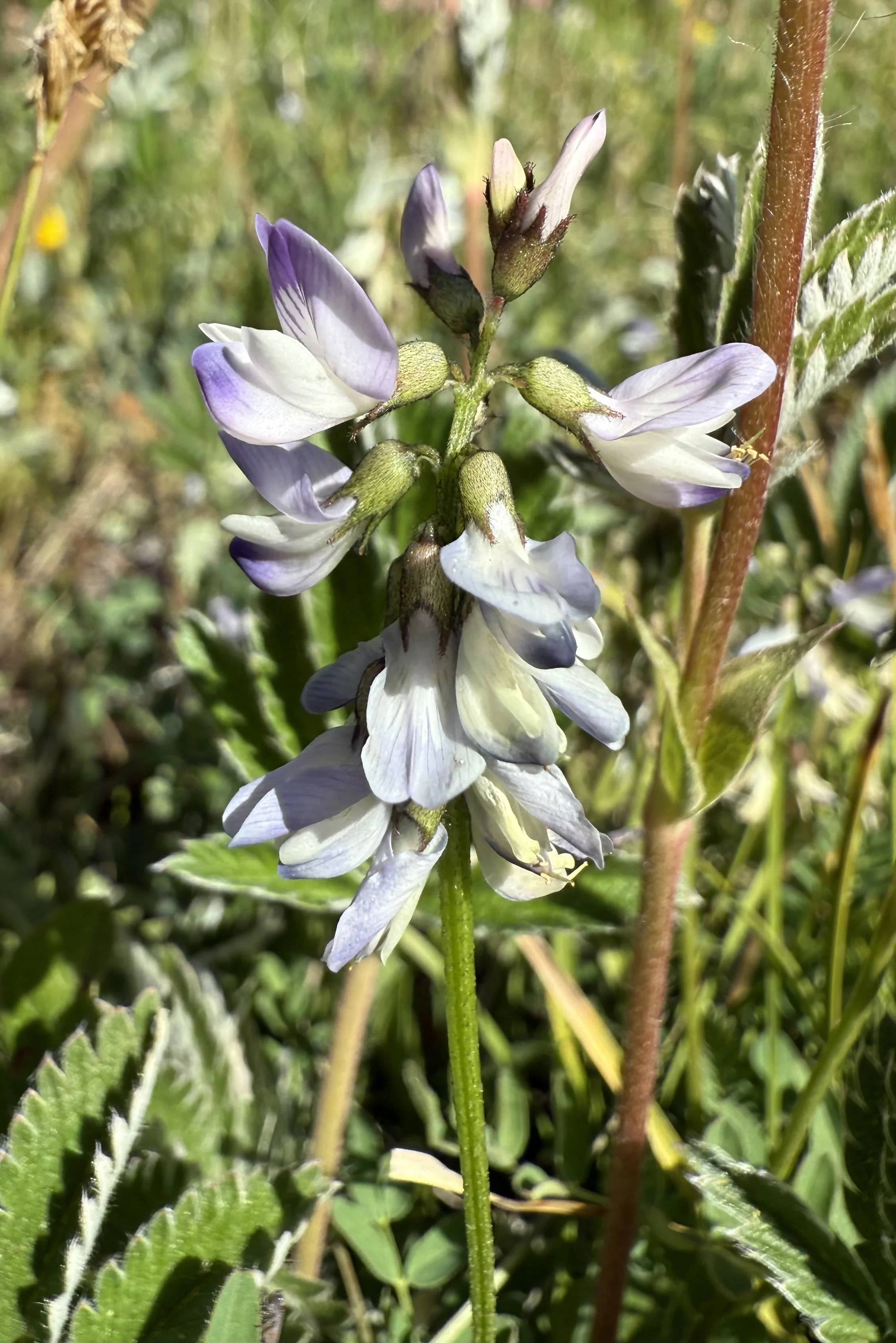
Astragalus alpina, July 2, 2025

Common & scientific name

Alpine milkvetch, Astragalus alpinus

Family

Pea, Fabaceae

Location

Roadside east, 10,000’

Fun, weird, helpful, or little known fact

This circumpolar, pioneer plant may be the most widely distributed and common Astragalus in the world. While it is rarely found above treeline in our area, despite its name, and is more common on the east side of the Pass than the west, it is always a delight to find, in subalpine woods, meadows, and even (especially!) roadside, with its dainty purple-and-white flowers set among its sprawling, ladder-like leaves. It is also enjoyed by caribou, arctic hares, and greater snow geese (as food, that is), and grizzly bears forage its underground parts.

There's gold in them thar' hills

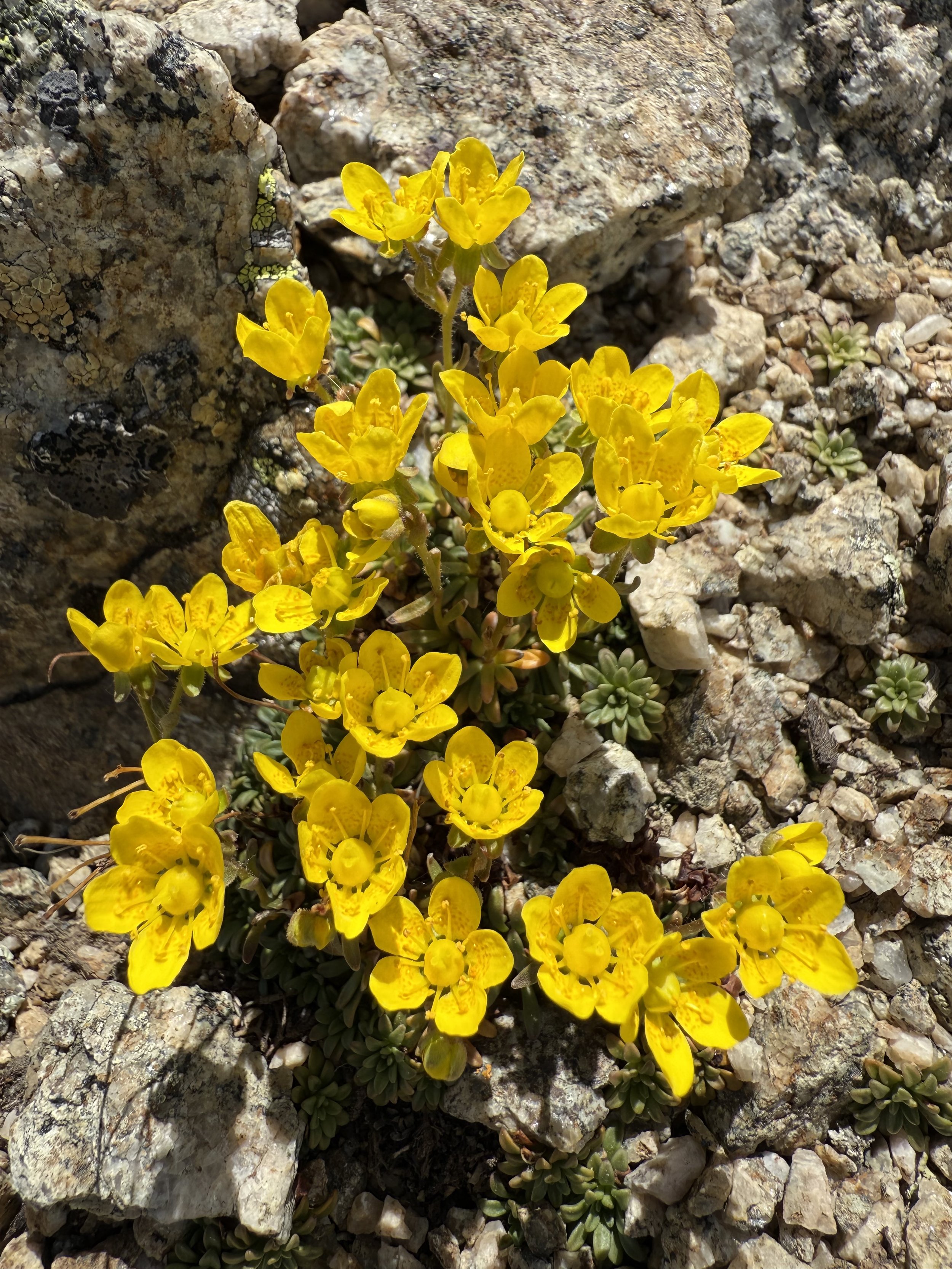
Saxifraga chrysantha, July 2, 2025

Common & scientific name
Golden saxifrage, Saxifraga chrysantha

Family
Saxifrage, Saxifragaceae

Location
Mountain Boy, 12,600’

Fun, weird, helpful, or little known fact
A single yellow flower with orange dots at the base of its petals sits atop a 2”-3” red stem covered with gland-tipped hairs (as can be seen in this photo) arising from a sweet little rosette of succulent leaves.  Yet another jewel of the alpine!  It does not have the red runners of its close cousin, Saxifraga flagellaris.

Harbour no regrets

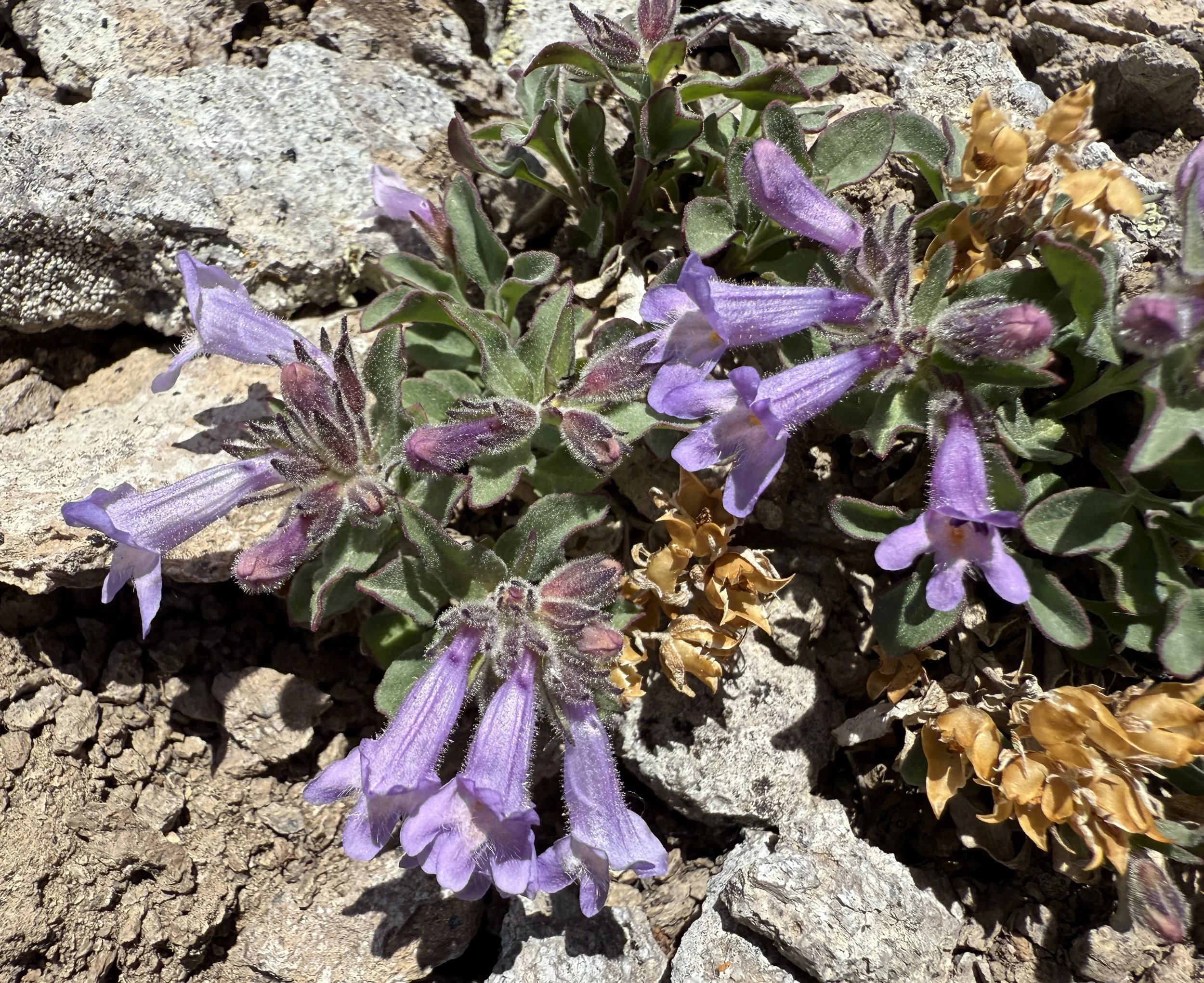
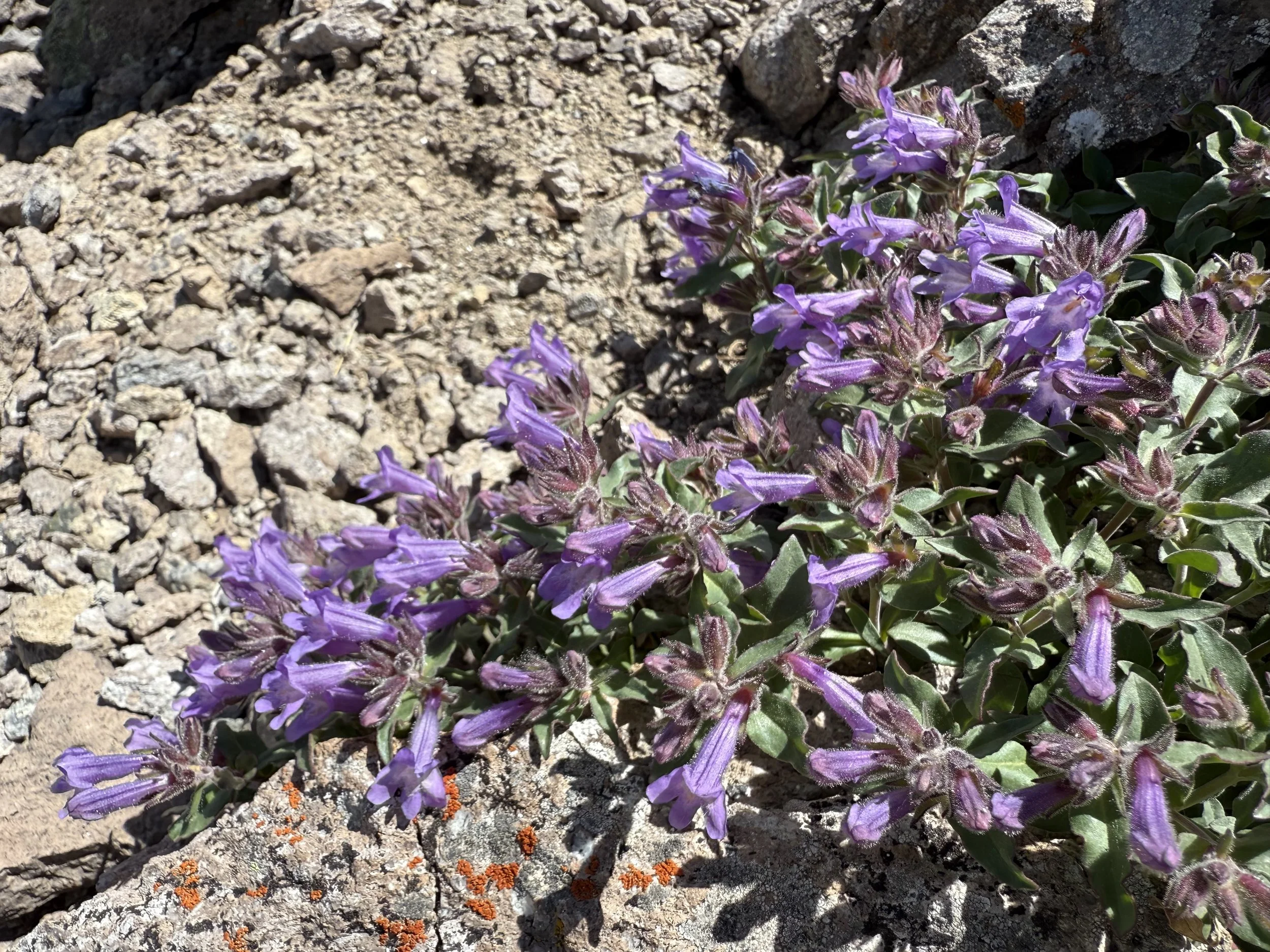
Penstemon harbourii, July 2, 2025

Common & scientific name
Harbour’s penstemon, Penstemon harbourii

Family
Plantain, Plantaginaceae

Location
Mountain Boy, 12,600’

Fun, weird, helpful, or little known fact
This one must be earned! Found only in Colorado, only in high talus fields, and only in a few spots on the Pass, this beautiful beardtongue is worth the climb and the search.